Five Great TV Dramas To Watch This Summer

Here Emma D picks five of her favourite TV Dramas that she recommends you check out

Bittersweet Mondays: Weekly Webcomic

Confab presents the brand new Bittersweet Comics debut with the first of a weekly web-comic series.

Game Review: Serious Sam: The Second Encounter HD

Sam returns in a remake of the 2002 classic sequel, how does it stand up?

The Sexism of Horror Video Games

The history of sexism in video games is almost as old as games themselves, Emma D discusses the underlying sexism of the horror genre

Film Review: The Amazing Spider-Man

Spidey's latest outing hits the cinemas, does this reboot make a name for itself or is it just another cheap Hollywood cash-in?

Volunteer: A Career for the Unemployed

With high rates of unemployment across the globe, Charlotte explains why now is a great time for the jobless to volunteer!

Overrated: The Legend of Zelda Skyward Sword

Claimed by many critics as 'The Best Zelda Ever!'. Long time Zelda fan Emma D argues why it didn't live up to the hype.

Showing posts with label review. Show all posts

Saturday, 28 July 2012

Game/Tech Review: Nintendo 3DS XL System

It's certainly bigger, but is it actually better?


Way back in March of 2011, when the 2012 Olympics were still far enough down the line that the horrendous logo wasn't plastered on everything under the sun, Nintendo released their next generation of handheld video game consoles, the Nintendo 3DS. Many eager gamers lined up for midnight launches across the country to get their hands on the new fancy 'glasses-less 3D' system. Despite the heavy anticipation and hype surrounding the system, the 3DS saw fairly lacklustre sales in its opening months, perhaps it was the wallet-devouring launch price of £220-£230, maybe it was the lack of must-have AAA game titles or it could have been the lack in significant aesthetics and name from Nintendo's previous DS handheld models, the Nintendo DS, DS Lite and DSi appearing to be just another revision rather than a fully new, more powerful system. Whatever the cause it prompted Nintendo to act quickly and slash the retail price of the 3DS to a far more acceptable £149.99 in stores, this new price cut and a handful of new must-have titles such as the Zelda: Ocarina of Time 3DS remake inflicted a huge and healthy spike in 3DS console sales.

Fast forward to now, the end of July 2012 and Nintendo have released a hardware revision of the 3DS, just 18 months after the 3DS launch. This revision, the 3DS XL's main selling point it commands is the 90% larger screens, 'the largest screens ever on a Nintendo handheld' the adverts boast. The top screen stretches 4.88 inches diagonally and the bottom touch screen at 4.18 inches. The original 3DS displays came in at 3.53" and 3.02" respectively.


Having played a few different games on the top screen, I've already begun to appreciate the larger, less reflective screen, 3DS games look great on it and the 3D works even better than before, with a larger 'viewing window' thanks to the screen size boost, this 'sweet spot' for the 3D is much more accessible. I often found myself holding the original 3DS closer than I would like to see more of the detail or get the best out of the 3D. Thankfully the 3DS XL can be played from a more comfortable distance without feeling the need to bring the system closer.
Up close however the 3DS XL does highlight the fairly low resolution (400x240 or 800x240 with 3D) of the top screen. If you look closely enough the pixels are far more visible to the human eye than they were on the 3DS. As Nintendo opted to keep the screen resolution the same some games can appear slightly more pixelated or 'jaggy' but I never found it to detract from my gameplay sessions, in fact, I found myself somewhat more immersed in games than I had been with the original 3DS.

Alongside the behemoth sized screens Nintendo has given the main body a slight makeover, gone are the fingerprint magnet glossy coats and instead, we're treated to a more premium and in my opinion, more attractive dual matte finish in black and either metallic Blue, Red or Silver. The stylus (which is now one solid body rather than the telescopic 3DS stylus) has been re-positioned to the right-hand side, in a move mirroring the DS to DS Lite stylus relocation, which is far more accessible during gameplay. Scrambling to find the stylus on the back of the original 3DS during gameplay was either hectic or game-pausing, the experience is far more seamless now.

The face buttons have seen some minor improvements, which now feel more clicky and as a result ever so slightly more responsive. The D-pad has received a minor size increase and due to the larger 3DS body, is far more practical to use in games, the original 3DS' size and shape made using the D-pad cumbersome and even cramp-inducing, so far I've had no complaints about using the D-pad on the 3DS XL. This brings me to the overall ergonomics of the unit, the console feels much sleeker and more comfortable to hold than its predecessor, which had protruding square edges and corners which I found didn't get on well with my gaming palms. This one fits far more elegantly into your hands and doesn't overstay it's welcome when playing for longer periods.


The lack of a second analogue slider pad is disappointing but I'd be lying if I said it was a deal-breaker, there are only a handful of games that make use of the Circle Pad Pro accessory for the 3DS, which I primarily used as a means of acquiring a more comfortable grip for my original 3DS. Nintendo announced a 3DS XL Circle Pad Pro would be released later in the year for those who refuse to play Metal Gear Solid 3, Resident Evil Revelations and the other couple of games without dual analogue action. Oddly the 3DS XL also lacks a power supply in the box, while this may benefit the size of the box and production costs it does leave new 3DS XL owners without a means to actually charge the system, Some retailers have bundled it with the system or it can be purchased separately for less than a tenner, the box subtly alerts consumers with small warnings as to the lack of a charger. One thing I felt the original 3DS did right was the inclusion of a plastic charging cradle users could effortlessly dump their console into charge when they were done gaming, without the need to fiddle around and plug in the power cable, sadly Nintendo has opted out of including a cradle for the 3DS XL in the box, although it is available for cradle lovers to purchase separately along with the missing charger for a questionable £20, I guess that's what Nintendo consider the price of conveniently charging your portable games system.

As well as all the aesthetic and ergonomic improvements Nintendo have also shoved in a larger battery for good measure, an inevitability really when those larger screens are going to need more precious energy. The battery life actually improves and last an hour to an hour and a half longer than the original 3DS on a full charge depending on brightness and wireless settings, a welcome upgrade considering the original 3DS' battery life wasn't great which goes against the grain for a Nintendo handheld.

Many of these improvements help fix many of the issues I had with the original 3DS and as a handheld, the 3DS XL feels far more suited for longer gameplay sessions. However, there are still a few areas the 3DS XL leaves me wondering why they didn't touch them up too. The cameras are as still shockingly bad as they were back on the DSi and original 3DS: grainy and low-quality, and I was disappointed the analogue slide pad isn't coated with a more grip-able texture though it's far from unusable. The sound levels coming from the unit's speakers were almost if not entirely identical to the original 3DS speakers, even at maximum volume it's not particularly loud and doesn't impress the ears. Of course, the use of headphones can alleviate this problem but I'm not one to wear headphones around the house which is, which is where I spend the majority of my 3DS gaming time, despite it being portable.


Perhaps it's all due to my issues with the original 3DS but when it comes down to it, I'd be hard-pressed to argue that 3DS XL's improvements aren't significant enough to recommend it over the original for first-time buyers looking to buy a Nintendo 3DS. The longer battery life and the more ergonomically satisfying form factor were enough for me to opt for an upgrade from my 3DS. The larger screen is definitely a bonus too, especially for the glasses-less 3D.  For others considering upgrading, I'd still recommend if like me, you find the original 3DS' comfort levels just aren't adequate enough for something designed to frequently fit in your hands for various periods. If you're still happy enough with your original 3DS and don't have the cash to spare then stick with it. A substantial influence on my decision to upgrade was a local retailer's surprisingly generous trade-in value for the original 3DS when put against the new 3DS XL. The lack of including a power adaptor is a confusing move by Nintendo but a problem that can be easily and cheaply solved. Those looking for more power and higher-end graphics closer to the likes seen on home consoles may be better suited to Sony's marginally more expensive offering, the PS Vita.


Product: 3DS XL
Manufacturer: Nintendo Co. Ltd
Release Date: 28/7/2012 (Europe/Japan) 19/8/2012 (North America/Australia)
Retail price: £179.99 (UK) $199 (USA)
Colours Available: Red+Black/Blue+Black/Silver+Black (Europe/Japan only)

The Good:
+ Playing games on the new larger screen looks and feels great
+ Less glare/reflection on the top screen
+ Glasses less 3D simply looks and works better thanks to the larger screen
+ Improved battery life
+ Nicer Dpad and face buttons and proper start/select/home buttons
+ The units sleeker and more rounded edges make it more comfortable to hold for prolonged gameplay sessions
+ Stylus now far more accessible during gameplay
+ Fewer fingerprints thanks to the matte finish


The Bad:
- Heavier and less portable
- Still the same low screen resolutions
- Some games can look slightly worse on the larger screens
- Lack of a second analogue slider pad feels like a missed opportunity
- No charger in the box
- No significant improvements to the mediocre speakers
- Incompatible with many 3DS accessories (including circle pad pro)

Wednesday, 25 July 2012

Film Review: The Dark Knight Rises


Four years on from the release of The Dark Knight, Christopher Nolan's Batman trilogy comes to a climactic finish with The Dark Knight Rises. Set eight years after the night of Harvey Dent's death, we see things have changed drastically in Gotham. Bruce Wayne is now a recluse, the streets are free of organised crime and the Batman has become little more than a scary bedtime story. There is a complete shift in tonality from The Dark Knight, Nolan strips the people of Gotham of the personal responsibility he showed they had the capacity to take, deciding the unelected few are more capable. Perhaps thematically The Dark Knight Rises is less satisfying than its immediate predecessor, but the stakes are raised, and the film delivers high octane action and fantastic performances from all members of its cast.


The core group of Christian Bale (Bruce Wayne/Batman), Michael Caine (Alfred), Morgan Freeman (Lucius Fox) and Gary Oldman (Commissioner Gordon) is joined by a good few members of the Inception cast; Joseph Gordon-Levitt appears as John Blake, a rookie cop who still believes in the Batman, Marion Cotillard Smoulders as Miranda Tate, a wealthy philanthropist interested in doing business with the now faltering Wayne Corporation and Tom Hardy commands the screen as Bane, Batman's latest and deadliest adversary. Another new addition to the cast is Anne Hathaway as Selina Kyle (Catwoman, although she is never called such within the film). Despite making the film look bigger and better with swooping cityscape shots and various impressive backdrops (deserts, cities, prisons, even the sky becomes an important location) Nolan achieves the most personal Batman film to date, completely due to the fantastic one-on-one scenes between the actors: most notably the scene between Michael Caine and Christian Bale in Wayne Manor (for those of you who have seen the film, you know exactly the one I mean).


Bale's bitter, hardened Bruce Wayne has aged noticeably since his last outing, having become more resentful and less able to wear his mask (both the literal one and the figurative). Anne Hathaway as Kyle asks him 'Who are you pretending to be?' to which he replies smiling 'Bruce Wayne, eccentric billionaire'. The dichotomy between the carefree man he is supposed to be and the tormented figure he has become has never been more simultaneously pronounced and yet blurred. As most of the characters struggle with their conscience and past traumas, the moral compass of the film is undoubtedly John Blake, played superbly by Gordon-Levitt. His story-arc keeps the rest of the film from becoming morose and reconnects the franchise with its earlier, less world-weary roots.

It would be remiss to neglect to mention Heath Ledger's sorely felt absence in the film. Nolan deliberately does not mention the Joker at all following Ledger's death prior to the release of The Dark Knight. Tom Hardy does a fantastic job as Bane, who is definitely Bond villain-Esque invoice but still terrifying. He operates in a very different world from the Joker and is at the opposite spectrum of evil. Whereas the Joker thrives on chaos, Bane is undoubtedly a man with a plan. Which villain you find more frightening depends on which side of the coin you are most disturbed by. Personally, I feel the Joker put it best himself in The Dark Knight: 'Nobody panics when everything goes according to plan'. However, though Bane begins as a menacing and interesting character, he is ultimately let down by the script.
For fans of the franchise, The Dark Knight Rises is sure to please. With numerous references to both of the previous films, it feels like a true conclusion to the epic saga. It is in essence more of a sequel to Batman Begins than The Dark Knight but captures some of the true horrors which is prevalent in the latter.

By Emma-Lee Davidson

Monday, 23 July 2012

Music Review: Gojira - L'Enfant Sauvage [Album]


L’Enfant Sauvage is, to put it simply, a masterwork of progressive metal. It manages to be just as huge and monolithic as Gojira’s previous release, with monstrous riffs, pick scrapes, inhuman drumming, and enormously passionate vocals. But, unlike The Way of All Flesh, this record doesn’t seem to drag on for a second in its fifty-three-minute runtime -- every moment is endlessly sensual and fascinating.

What is most remarkable about Gojira is that they have managed to attract a comparatively large audience in the metal mainstream, while still maintaining a very unique -- and, indeed, heavy -- sound.


While, upon first listen, there may seem to be absolutely nothing unique about their sound, there is something extremely distinctive about the gargantuan maelstrom of sound they create that sets them apart from other big names in progressive metal, whether that’s Joe Duplantier’s characteristic vocal style or Mario’s ferocious drumming. Although there is little to really set this release apart from the others, there are some subtle differences to be found. For one, the album is entirely devoid of the somewhat stale blast beats which could be found in some tracks on The Way of All Flesh. Moreover, the album seems to have changed lyrically from their past releases, being less ecologically focused than From Mars to Sirius, and less existential than The Way of All Flesh. Instead, its lyrics seem to be more concerned with personal struggle, while not quite delving into territory as dark as Terra Incognita. 

If there is anything negative to be said about this record, it’s that, while there have been no real steps backwards for the group, it doesn’t seem to build upon the band’s discography as much as their past releases have. In other words, L’Enfant Sauvage brings practically nothing new to the table for the band, musically. While this isn’t necessarily a bad thing for most fans of the group, if you’re like me, you may have grown weary of the Gojira’s sound from extensive listening to their past efforts. While that may reflect personal change more than it does the musical prowess of the band, this past album seems to exhibit less development than any of the group’s previous releases have, and, because of this lack of evolution, listening to L’Enfant Sauvage may not be anywhere near as mind-blowing as their past two releases were the first go-round if you are already familiar with the work of Gojira.

When all is said and done, though, L’Enfant Sauvage is about as good as any fan of these french titans of metal could have hoped for, especially following their last record, which many people thought couldn’t be beaten. It is a must-listen for any metal fan and is a serious contender for album of (the first half of) the year.

Stream the whole album here.

By Hunter Flynn

Friday, 20 July 2012

Film Review: The Dark Knight


'He's the hero we deserve, but not the one we need right now'

When Batman Begins joined Spiderman 1 and 2 as an usherer-in of the new age of superhero movies expectations were high for its sequel, The Dark Knight. Thankfully, the second installment in Nolan's Batman franchise not only met, but far exceeded all of them. The film plays out like a fast paced thriller in two acts and boasts outstanding performances from the entire cast. Hans Zimmer and James Newton Howard's score is phenomenal. The Dark Knight is far more affecting than Batman Begins and worlds darker, with one of the greatest movie villains of all time in Heath Ledger's Joker.

As the logos for production companies Warner Bros., Legendary Entertainment and DC Comics come onto the screen, they do so slowly with only the slightest trace of background noise, as the audience watch with bated breath. The Batman logo appears in blue flame and a single note can be heard, before the bang of a drum introduces the first scene. The camera pans across a rooftop towards a skyscraper, and the music begins.  It projects tension and drama through the use of strong, heavy bass lines, staccato strings and percussion. The tension builds to a climax as one of the glass windows shatters from a gun shot by a masked clown. The pace quickens as we see more clowns, working together and it transpires they are robbing a bank, owned by the mob. The clowns discuss the man who planned the job, the enigmatic Joker, who is apparently 'sitting out' but still expecting 'a slice of the action' which the other clowns aren't happy about. The entire scene is perfectly orchestrated, creating suspense and moments of panic. The audience wait for Batman to turn up and save the day, but the mysterious leader of the gang manages to stay completely under the radar until he has finished his business (and after killing all of his partners). He removes his clown mask towards the end of the scene, only to reveal his painted face. This is the Joker. All superhero directors need to take note; this is how to introduce a villain.

Christian Bale continues in his role as Bruce Wayne, perfecting the husky voice used by his alter-ego which was inconsistent in the first film. Katie Holmes is replaced by Maggie Gyllenhaal, who manages a far more convincing Rachel Dawes. As I alluded to in the Batman Begins review the supporting characters are far more developed in The Dark Knight, although it must be stated that at a running time of 153 minutes it is slightly longer than its predecessor and builds on the foundations laid by it. Morgan Freeman's Lucius Fox questions Wayne's methods and morally struggles with the task given to him. Gyllenhaal is given much better material to work with than Holmes and plays Rachel Dawes with the perfect balance of strength and vulnerability required of her. New additions to the cast Aaron Eckhart as Harvey Dent and Heath Ledger as the Joker are both superb in their roles. Eckhart portrays a spectrum of emotions as Dent, who swings from cocky to insecure in the first act, before becoming the broken and terrifying Two-Face. Ledger is the perfect balance of black humour and horror, commanding every scene he is in.


The fight scenes are excellently choreographed, delivering lightning-quick action and high octane chase scenes in the batmobile. This is very similar to the chase scene in Batman Begins, however upping the ante by adding helicopters and giant trucks with villains who are actively trying to kill their target rather than just capture. The bar is constantly raised, jumping out of windows hundreds of stories up, sky diving, motorbike stunts, the action scenes never lose pace, and while a little predictable, are still spectacular.

Nolan deals with mistaken identities not only in the opening scene but also in Batman's first appearance; the scene with the Batman imposters is excellently handled. This plays with the Joker's assertation that 'when the chips are down these "civilised people" will eat each other', which suggests that good and bad are relative and entirely dependent on perspective. The idea of this juxtaposition is feature in the posters for the film, most featuring a dull, bluish background with a blaze of red set against is, often as the Batman logo (suggesting perhaps that Batman is at odds with the city and foreshadowing Lt. Gordon's line that he is 'the hero Gotham deserves, but not the one it needs right now'). But as in the fake Batman scene where the Scarecrow recognises that they are imposters, Nolan asserts that there is good and evil, and what side you are on depends on the choices you make.

The Dark Knight is clever, thrilling, dark and heartwrenching. The characters (especially the villains) take on a life of their own, and spawn some of the best lines in the entire franchise, which Batman fans will be quoting for years. It is little wonder that Heath Ledger was posthumously awarded the Oscar for Best Supporting Actor, the Joker is easily one of the most watchable and entertaining (not to mention terrifying) villains of all time. If The Dark Knight Rises even comes close to being as good then it is set to be fantastic. By Emma-Lee Davidson

Wednesday, 18 July 2012

Film Review: Batman Begins

"It's not who you are underneath, it's what you do that defines you."


Ahead of the release of The Dark Knight Rises, Confab will feature reviews of both Batman Begins and The Dark Knight, to get you in the Batman mood - if you aren't already. 2002's Spiderman and its sequel can be credited with bringing superhero movies back in vogue. Sam Raimi's webslinger series was evidence that the superhero movies could be more than just action films, delivering an intelligent, emotional story with humour as well as fantastic action scenes. If Raimi established this formula, Christopher Nolan perfected it with Batman Begins. The first instalment of Nolan's reboot of the Batman series sets the scene for arguably the best comic book (and indeed action) franchise of all time.


Batman Begins introduces us to a young Bruce Wayne, exploring his fear of bats and the death of his parents. Disillusioned with the justice system after the arranged release of his parents murderer he goes to the courtroom with a gun intending to exact revenge. This darker side of Wayne has never been fully explored in the numerous Batman films which precede this one. It is safe to say this is an indication of darker things to come for the series, as well as its protagonist. Of course, our hero doesn't become a murderer, although whether or not it was because he is beaten to the punch by one of mob boss Falcone's henchmen we are left to decide for ourselves. He confronts Falcone, seeing him as the real cause of Gotham's problems, only to be told he is a tourist in the underworld and that he will never understand the darker side of the city. This prompts Bruce to run away to the Far East where he lives as a criminal but asserts that he never becomes one.


The rest of the film follows Bruce through his training all leading to his becoming the Batman. Christian Bale delivers a fantastic and versatile performance as Batman. As Bale himself has stated, he plays four characters in one man: the pre-Batman, younger Bruce who is filled with anger and bitterness; Bruce Wayne's playboy billionaire persona; Bruce Wayne the troubled and guilt ridden man and the enigmatic, angry Batman persona. Bale is supported by Michael Caine as loyal butler Alfred, Morgan Freeman as weapons expert Lucius Fox, Liam Neeson as mentor Henry Ducard, Katie Holmes as love interest Rachel (yes that's pretty much the only remarkable thing about her character)and Gary Oldman as Detective Gordon.


Caine plays his role with wit and has an excellent paternal chemistry with Bale. The scenes between Alfred and Bruce allow the latter to display a vulnerability and humour the script allows little room for elsewhere. Freeman's Lucius Fox is sharp and sardonic but isn't given much scope for development (something which is rectified in The Dark Knight). Liam Neeson plays a convincing mentor figure for Bruce when he is training in the Far East, teaching him much of the skills he will later use as the Batman and delivering some great one-liners later in the film. Katie Holmes performs the role with little imagination but in all fairness to her, Rachel Dawes of Batman Begins isn't a character who has been crafted with much to begin with. The childhood friend who acts as a conscience for the protagonist is annoying at times and sickly sweet at others. Oldman is fantastic as Detective Gordon, a good cop trying to do the right thing in a bent city. He is both warm and down to earth, providing some of the more humourous moments in the film and is a real pleasure to watch.


The villain of the film is kept deliberately mysterious by Nolan until very close to the end, something which helps inject the plot with tension and suspense. Cillian Murphy plays faux-villain/henchman the Scarecrow, donning a terrifying mask and using a hallucinogenic drug as a weapon which knocks Batman down a peg or two in one of the more scary scenes in the film. Fans of the comics may have been disappointed by the representation of the Scarecrow as Murphy seems to be much less manic and deranged than his literary counterpart. However, Nolan's Scarecrow seems to fit in much better with this film and allows Nolan to fully exploit the character of the Joker in Dark Knight without there being too much similarity.


Batman Begins strikes all of the right notes; it is dark, intelligent and witty with a stellar cast and a fantastic lead. There is much more humour in it than in The Dark Knight which means it never quite achieves the dramatic power which its sequel is able to. The one slight drawback is the relationship between Bruce Wayne and Rachel Dawes. The chemistry between Bale and Holmes is practically non-existent. It is difficult to believe the attraction from Wayne to the irritating and even boring Rachel. Their one kiss is flat at best, awkward at worst. Thankfully, the focus of Batman Begins is on Christian Bale's character and the romance element is given little enough screen time for this not to become a detracting factor.


Overall, Batman Begins is a fantastic introduction to the franchise. It explores Batman's in enough depth to be interesting and insightful but not to the extent that it slows down the plot. The supporting characters aren't particularly developed but due to the nature of the film, particularly as the first in a series, this can be excused. Most of all, Christopher Nolan achieves what Sam Raimi set out to but failed in Spiderman 3, exploring the darker side of the superhero character without turning him into a farce.


By Emma-Lee Davidson

Saturday, 14 July 2012

Game Review: Mass Effect 3 (Extended Cut)


Mass Effect 3 is the epic final chapter of a trilogy I have sunk more time into than any other series. While this review does seem a bit late, with the release of the Extended Cut DLC, the game is now more complete than it was on release. So now seems like a good time to review it.

Mass Effect 3 follows the continuing adventures of Commander Shepard and the crew of the SSV Normandy, as the galaxy erupts into a ferocious war against the organic-decimating machines, the Reapers. Shepard’s task is to build an army the likes of which the galaxy has never seen, and solve the thousands-of-years-old issues that cause tensions between the various alien races.

Allying these races against the Reapers forms the main brunt of the story. Unlike in Mass Effect 2, which saw Shepard attempting to recruit highly skilled individuals for his suicide mission against the Collectors, the stakes are bigger and Shepard needs to convince the entire galaxy to forget the grudges of the past.

While this may seem like it makes for a much less personal story, the ability to import your saves from the previous two games means that there is a much greater connection to your individual Shepard. It is easily the most emotionally-affecting title in the franchise, as we see Shepard struggle to deal with the losses he has encountered (and in most cases, caused) over the years, as we see well-loved characters die, and as we see races teeter on the brink of extinction.

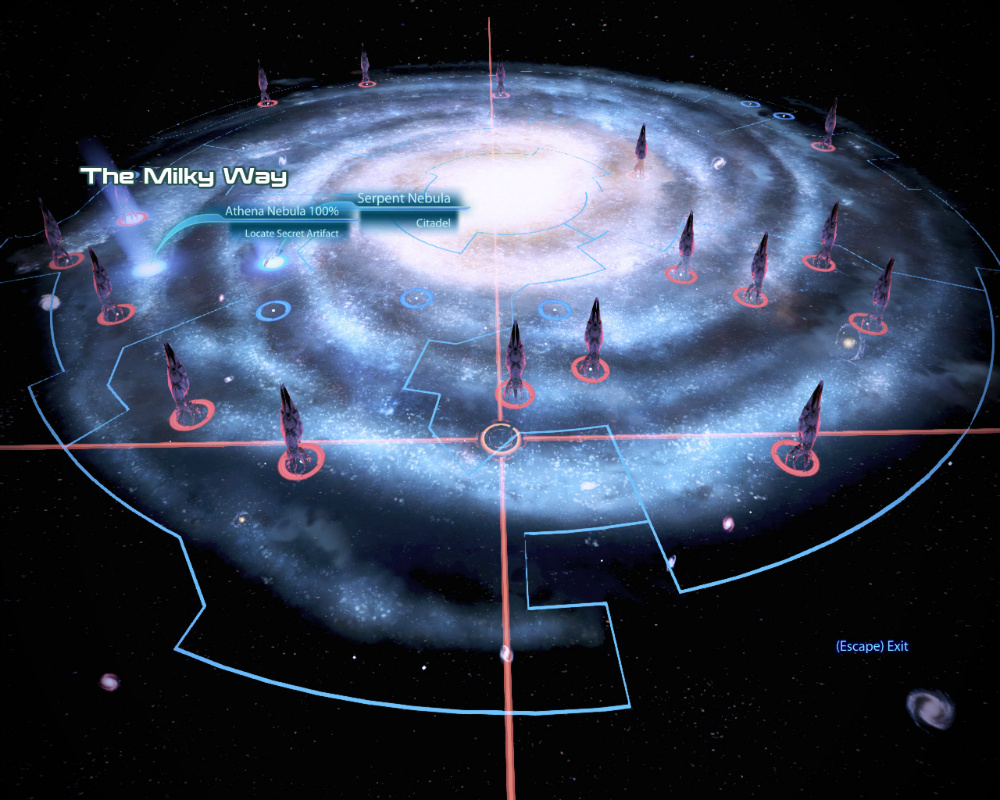
As you assist individual characters, militaries and races, you gain War Assets which add to your Galactic Readiness meter. This essentially determines how well prepared the galaxy is for the inevitable final battle and is integral to the success or failure of the end-game. It’s a system that works well, and it does an excellent job of letting you know how well you are doing.

As an evolution from the original Mass Effect, Mass Effect 2 was astounding. Clunky combat and menu systems were streamlined, and the game was pretty much as polished as it could be. So it’s little wonder that, while Mass Effect 3 definitely improves on its predecessor, it’s not as big a leap forward as the previous sequel. But the important thing is that it does improve. Tedious mechanics like planet scanning are minimised to their bare essentials, movement is slicker as Shepard can now roll, make prompted jumps across gabs and climb ladders, and the Galaxy Map is easier to navigate (with an added threat of Reapers chasing your miniaturised Normandy).

But not every change works as well. Side missions are given to you awkwardly, as you overhear conversations on the Citadel (essentially a galactic Hub) and then dispatch yourself to solve these people’s problems. It’s a little like hearing someone in the street say they fancy a sandwich, and then you decide to return in a week with a sandwich for them. It’s awkward, and they feel a little pointless in the grand scheme of things, despite the fact that you gain War Assets for these little detours.

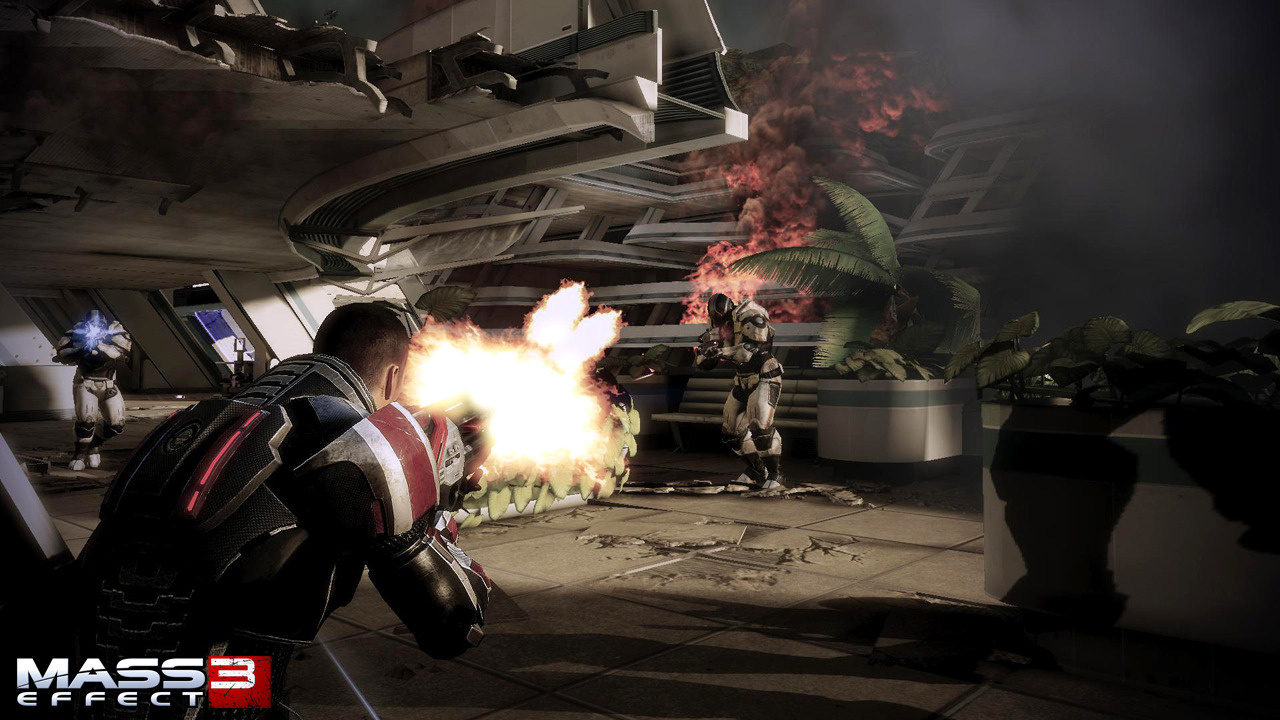
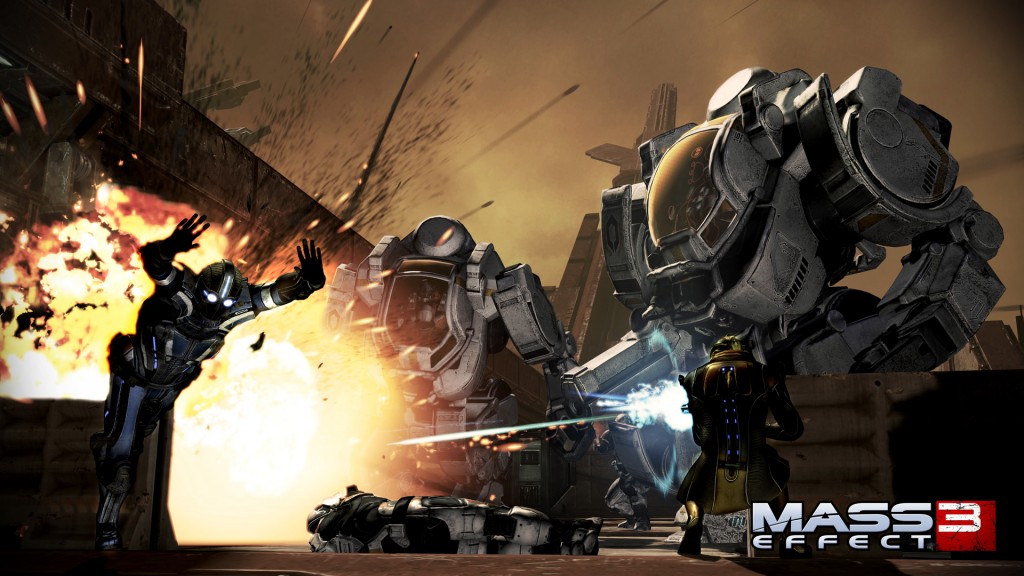
It’s a good job then that the main story missions work so well. Each one feels relevant and worthy of the time of the galaxy’s saviour. The conversation and choice system works the best it ever has, and your choices feel like they have a genuine impact in determining the fates of entire species. Combat is also mildly improved over Mass Effect 2. The cover-based third person shooting feels fast and fluid, with the game’s Powers system bringing an excellent balance and some stunning effects. The addition of a heavy melee (which differs for each class) also brings a different, welcome aspect to fights.

The AI of your squad works well, and they are often useful in fights, only going down if you aren’t paying enough attention to them. The enemy AI also provides a great challenge. They won’t just stick to cover and pop up like Whack-A-Moles, they will throw grenades, attempt to flank, and generally try their best to kill you. There are a variety of different types of enemies and each one requires a different set of tactics, which keeps the gameplay feeling fresh on your umpteenth playthrough.

Now, as this review is being written because of the Extended Cut DLC, I should mention the endings (spoiler-free). I was one of the people unhappy with the game’s original endings. I thought they were full of plot-holes, were very vague, and were just generally unsatisfying for someone who has invested 5 years and between 20-30 combined playthroughs of all three games. But with the addition of this DLC, I no longer feel like I’ve wasted my love on this franchise. Each ending feels satisfying and any previous inaccuracies are explained away well. I sat through my ending with a grin on my face the entire way through. That says a lot when I was previously so disappointed.

Despite being a story-and-character-driven game, Bioware decided to include a multiplayer component to Mass Effect 3. It could very easily have gone wrong, but thankfully it works amazingly well. Each match gives you Galactic Readiness to use in your single-player game and being able to play as each of the galaxy’s races is a treat. You haven’t played Mass Effect 3 until you have head-butted a Brute to death as a Krogan. Combine the excellent gameplay with Bioware’s continued free updates, and this becomes a multiplayer mode I will gladly sink many more hours into.


Fans of the series play Mass Effect for the story, for the characters, and for the fascinating universe that Bioware has created. Mass Effect 3 does not disappoint. It’s a thrill to play and is a world I will continue to engross myself in for many years to come. If you haven’t given this excellent franchise a shot yet, do yourself a favour and pick it up.


Developer: Bioware
Publisher: Electronic Arts
Platforms: PS3, Xbox 360 (Reviewed), Windows, Wii U
Genre: Action RPG/FPS
Release Date: 15 June 2012
Price: £39.99/$69.99

By Paul Brown

Friday, 13 July 2012

Game Review: Mutant Mudds


Mutant Mudds brings us back to the old-school retro style look, and it's a game that should be played by all seasoned players! This one was supposed to be released as a retail title on Nintendo DS as Maximilian and the Rise of the Mutant Mudds, but sadly, that didn't happen. The project was then moved to Nintendo's DSiWare service, but ended up not going there either. The game eventually found a home on the Nintendo eShop and PC, under its current name today. It's been a long time coming, but it has been worth the wait!


This game is developed by Renegade Kid, the team that worked on popular games such as Dementium and Moon for the Nintendo DS, and is lead by Jools Watsham. Mutant Mudds is an old-school platformer, where your objective is to eliminate the invasion of Mutant Mudds that have landed on Earth!


The player controls Max. Max is equipped with a jet pack, allowing him to hover across areas he can't do by just jumping alone (which is very similar to Gargoyle's Quest on the Game Boy). Also equipped is a water cannon to help eliminate enemies. There are 40 levels spanning across 5 worlds in the game, which includes main, secret and boss levels. Each main level has 100 jewels, and a water sprite in all levels to collect. Mutant Mudds difficulty is harder than first expected. The level design is done extremely well, and the environment of the enemy's moves takes a while to get used to. There are warp panels that allows Max to further away or closer towards you, which may alert some players like myself of where you are and where you're actually going (believe me, I got tricked at a couple points near the end of a level because I thought I was touching the water sprite, but really wasn't!). Also, each level has to be done on a time limit, which may put some pressure on players to get everything in that level. Each level has a secret area, which is marked either G-Land or V-Land. These secret level doors actually has an influence to the Game Boy and Virtual Boy. Fortunately, when you enter these secret doors, the time resets. If you die in these secret areas you immediately go right back to the beginning of it without having to start at the beginning of the main level itself. In terms of collecting things, you only need to collect the water sprite itself. However, that doesn't mean you will go without a challenge, as the secret areas may be harder than the main areas, bringing veteran players to the test.


Mutant Mudds has great usage of the 3D feature, with at least three layers put into it. The 3D fits quite well with the colourful, retro layout. Another thing that gave me quite the appreciation is the chiptune music, which is an added bonus! Going to the game over screen a lot of times usually is frustrating, however with this one, the music really touches my heart and is one of the most memorable tunes I've heard in a long time!


If there is any complaints about Mutant Mudds I have, it's the lack of items and objects. There is only three available right now, which is not much. If it had a variety of weapons and/or objects of such like in the Mega Man games, then players would have the ability to pick the weapon of their choice.


Conclusion


Renegade Kid has made Mutant Mudds is a game that can't be missed. It's clever level design and its difficulty makes this a must download purchase. Although, the initial game is fairly short, there will be extra levels added soon. If you're a fan of these types of games, or someone who is looking for something new to play, go download this now and experience this terrific retro-style platformer!


Publisher: Renegade Kid
Developer: Renegade Kid
Genre: Platformer
Platform: 3DS eShop (Reviewed), PC
Players: 1
Release Date: 21st June 2012
Price: £8.00/$8.99


By Vernon Schieck

Thursday, 12 July 2012

Game Review: Limbo


When I first started to play Limbo I wasn't sure what to expect. Reputed to be one of the best and most commercially successful indie games of all time, it had a lot to live up to. Vaguely aware of the game's art style due to stills on gaming websites, I loaded it up, but was completely unprepared for the game that came up before me. Because what stills of the game and reviews fail to encapsulate, is how much of the appeal and experience of Limbo lies in the atmosphere created by the animation and sound (or lack thereof). On the surface, Limbo is standard platformer, pretty much as simple as they come. There is nothing in the way of story within the game itself; Playdead only gave the game the tagline: Unsure of his sister’s fate, a boy enters the unknown. But it is this simplicity and ambiguity wherein lies the genius of Limbo.

On starting a new game the screen transitions from black to a dark forest in which the boy lies. The graphics are in greyscale, images in the forefront and background are out of focus, only the playable area is sharp. The screen flickers like an old black and white movie but nothing happens. I waited for my player to move, or for some indication that the game had begun, but until I pressed one of the arrow keys, the boy remained flat on his back. Upon hitting the key, the boy's eyes light up and he slowly got to his feet before waiting again for my command. This was the first indication that Limbo was not the usual spoon feeding game, that would offer instructions and hints in order to help the player solve a puzzle. The game required the player from the first instance to be proactive and learn how to control the boy themselves.


The boy's first challenge is climbing off of a tree trunk. It is completely simple, requiring only that he drops or jumps down close to the edge so he lands safely on the sloping ground below. From the top of the tree trunk it is impossible to see the ground and requires the boy to make a leap of faith. If the boy takes a running jump off of the trunk he will fall to his death, teaching the player early on in the game that being overly confident and taking action without thinking will get them nowhere. The player continues with care and trepidation, adding to the tense atmosphere instilled by the soundtrack.


It is difficult to underestimate how eerie a game without sound can be. The sound of footsteps, the rustle of trees, the crack of bones:  this is Limbo's soundtrack, at least in the earlier stages of the game. The distinct absence of sound in the initial stages, makes the louder sounds in the later levels all the more significant. The violent snap of the animal traps sent me flying about a foot in the air and shocked my system with adrenaline.


By now, the reader has probably sensed a strong sense of fear from this reviewer. This is due to the fact that (bear in mind I am a massive fan of the survival horror genre) Limbo is the most terrifying game I have ever played. The boy stumbles across dead bodies in cages, floating in pools of water and littered on the ground.  Seeing the spider creep silently behind you as you run away is far more affecting than any overproduced megaboss with frantic music of a Triple A title along the lines of the Legend of Zelda, Metroid and selected bosses of the Metal Gear series. The other boy figures who attack the player with dart guns and swinging traps make the outdoor area feel like Lord of the Flies without the cheery beginning, giving the game very sinister overtones.

The boy never gains any skills or power-ups, in this way the gameplay is very pure. Like other popular indie title Super Meat Boy, the difficulty of the game increases as new mechanics are introduced in each level. The boy must learn to time jumps, destroy body-possessing brain slugs and use anti-gravity switches in order to progress.  There are stages in which the whole level move and rotates (once in semi-darkness) which require great concentration on the players part, other levels which require different switches to be pressed quickly in order for the boy to reach the next level. The gameplay is innovative and the controls easy to use, with only two buttons: jump and action. Taking everything back to basics  allows Limbo to offer something original and atmospheric. The game doesn't last very long, you will finish it in a couple of hours, but if you are looking for something a little bit different and whole lot of dark I urge you to give Limbo a look.


Developer: Playdead
Publisher: Microsoft Studios, Playdead
Platforms: XBLA, PSN, Windows, Mac OSX, Linux
Release Date: 21st July 2010
Players: 1
Price: £6.99


By Emma-Lee Davidson

Tuesday, 10 July 2012

Game Review: Serious Sam HD: The Second Encounter

A welcome less-'Serious' & over the top shooter in the age of gritty realism: 


In "The First Encounter" Sam "Serious" Stone had to battle his way through vast hordes of enemies to prevent alien races from taking over the universe. As this is a direct continuation the story follows the same path however so does the gameplay.

Largely "The Second Encounter" is exactly like the first in the series just with a new environment and a couple of extra weapons and enemies so going into the game thinking there will be a whole lot more will leave you disappointed. I however was expecting exactly what I got and it definitely was not a bad thing.

The game starts with Sam crash landing in South America, conveniently close to the object he is now trying to obtain. The player is stripped of all weaponry collected in the first game which makes sense seeing as there will be players who start with this game and it is the beginning of a new part of the story. What didn't make sense to me was how the game reintroduced about half the arsenal within the first couple of stages along with three new weapons. 
Although the armoury felt more complete with a chainsaw, flame-thrower and sniper rifle to use, the pacing that the game used for their distribution felt rushed.

As ever Serious Sam does not hold back and throws everything it can at you right from the off however within the opening minutes you'll be facing enemies which weren't introduced until much later in the first game. This may be the reasoning behind including so many weapons in the very early stages of the game but it may be a little overwhelming to newcomers. With those two points out the way, alongside the old enemies are an array of new ones including chainsaw pumpkin men, alien soldiers and winged demons. This new cast of cretins adds a small but welcome variety to the enemy ranks waiting to get blown to pieces.


There are three scenarios throughout the game, South America, Persia and Medieval. Each has a unique look and different level layouts which is a lovely contrast to playing through a mostly yellow coloured campaign in the shape of Egypt from the first game.

An annoying feature is that you lose all collected weaponry at the beginning of each scenario, not just the first one. And each time you are quickly re-introduced to the lovely collection you had to leave behind. Again, it makes little sense to me.

In terms of core gameplay, it is largely the same as the first game but with different level structures. Puzzles are still no more complex than "find button, push button, kill an army equivalent to the population of the Earth and continue" but the game uses them well. The boss encounters are a lot more exciting than simply fighting another horde of enemies as this time three main bosses are included, one for the end of each scenario. Although they largely follow the same structure in terms of how to kill them, it felt good to have a finale style battle.

In terms of multiplayer, "The Second Encounter" includes a co-op mode and a death-match mode, which return from the first game, as well as a new survival mode. I managed to play all three this time around, if only for a short while however, I did gain an opinion on all three.

The cooperative model is the one people have hyped up for me. It allows for up to 16 players to battle side by side through the games campaign missions with unlimited re-spawns and what I visualised as full-on carnage. Sadly, I was disappointed. I paired up with around 5 others and played through a level midway through the game however with the firepower of 6 people it was ridiculously easy, let alone 16. I can see how people may find a thrill to having that many people play at one time against a mass onslaught however winning isn't fun if it's too easy and there is practically no way to lose.

There is a version of the co-op campaign which limits the team to three lives per level which means players actually have to be careful. This provides a much more tense and fun experience in my opinion.

The deathmatch mode was fun from what I played however I got booted from every game for playing the game as it's meant to be played; get kills, don't die. That aside, the arenas were nicely designed and the "Quake" style of play worked well.
There are several other game modes however deathmatch was the only one with players.


The last mode, survival, was the most fun I had outside the solo campaign. It is very similar to Horde mode from the Gears series or the Firefight mode from the Halo series however instead of multiple waves there is one never-ending one with timed enemy spawns. It was great fun to play, shooting everything in sight until you simply couldn't hold them back anymore. After you die, your time of death is logged and counts as your score. This provides a contrast to the L4D survival in which team time is awarded.

Overall I enjoyed the multiplayer aspects of the game but I personally feel a greater sense of achievement if I beat something really difficult on my own and when there is a way to lose.
I can imagine playing all of the different modes would be fantastic if playing with people you know as it always adds a greater element of fun than playing with or against random people.


Although it has flaws, "Serious Sam HD: The Second Encounter" was ab enjoyable experience. I'd have to recommend it over "The First Encounter" as it's practically the same game with simply more stuff added. The new enemies, weapons, power-ups and some truly wonderful secrets compliment the new campaigns to provide an intense, full-on old school fps.
For those who played the originals, you already know what the games are like, however, if you didn't get a chance to play it back in the day (like myself), give this remake a go. You may be pleasantly surprised.


Developer: Croteam
Publisher: Devolver Digital & CDV Software Entertainment 
Platforms: Steam (reviewed) & Xbox 360 Arcade
Genre: FPS
Release Date: 28 April 2010
Price: £6.99 / 1200 MS Points


-Tom Seed

Game Review: Lollipop Chainsaw

Attractive girls can kill zombies too...


Lollipop Chainsaw has been surrounded by controversy. It has been accused from many corners of objectifying women, perpetuating stereotypes and being downright crude. But what all of the publicity has tended to leave in the dark is - it's a pretty average game. The opening cinematic plays out like a nineties chick flick along the same lines as Clueless and heroine Juliet is equally as vapid as the film's Cher. The melange of the undead and high school drama isn't exactly original but provides the foundation for a story which is at times genuinely witty and entertaining, despite its self-conscious ridiculousness.


Juliet Starling is a chainsaw-wielding, cheer leading, scantily clad, blonde bombshell, whose ditsy dialogue often invokes eye-rolling and the occasional chuckle. As she fights her way across her hometown she is accompanied by boyfriend, who thanks to an unfortunate zombie-biting incident at the beginning of the game, is now a decapitated but animate head.

Comic book style animation and stills combined with a cel-shaded colourful approach provide Chainsaw with a fresh, endearing look which combines perfectly with the light-hearted comedy which is at the heart of the game. It is a shame that so much of the animation is dedicated to Juliet in compromising positions; never a cut scene goes by without an up skirt shot, which is ironic given that an achievement is awarded for managing this in-game. Unfortunately, this does not even scratch the surface of the misogynistic behaviour that Juliet is subjected too. She is frequently called a 'whore' or 'bitch' and one of her classmates tells her he will 'totally masturbate to you tonight'.


The controls are your basic hack and slash. Juliet has a pom-pom stunning attack as well as her basic chainsaw move. I often found the controls to be sluggish and at times even unresponsive. The combo moves are simple button combinations but only a couple seem to hit consistently. After gaining enough meter Juliet can unleash her super mode which allows her to take out zombies in one hit while 'Hey Mickey' plays in the background - CAUTION: you will know most of the words by the end of the game if you don't already. Juliet gains other super moves throughout the rest of the game, involved propelling Nick out of a cannon and gaining a super blaster projectile weapon which is probably the most accurate weapon. Juliet does a dance after racking up some combo kills which leaves her vulnerable to attack, which can be very irritating and damaging if she is in the middle of a group of zombies.


There is little in the way of original features on offer in Chainsaw. Some of the stages have some quirky features, such as the hallucinogenic farm area which allows you to plough through a field of zombies on a combine harvester and the Funland stage which features Pacman and Pong influenced levels.

If the tiny outfits, misogynist comments and dodgy controls haven't put you off yet, it is purely because of the humour. While Juliet's remarks often fall flat ('you're like a kitten, a kitten that doesn't speak Japanese') her boyfriend's banter is what keeps the comedy in the game. With gems such as 'This is so much fun, I almost forgot all my friends are dead!'. However, the main problem with Chainsaw, is that the line between satire and filth is constantly blurred. What begins as an ironic poke at American culture quickly becomes an excuse to objectify Juliet in every way possible, leaving an uncomfortable aftertaste. Some of the worst moments include Juliet revealing her aged Sensei taught her how to pole dance and gave her some 'sweet lap dancing moves'.

While the controls are temperamental and the behaviour towards Juliet outrageous, Lollipop Chainsaw offers some entertainment. Juliet is far from an engaging protagonist but Nick and family go a little way in making up for that. If you can look past the often distasteful but sometimes witty jokes and see the game for what it is - a bit of fun - Lollipop Chainsaw is a reasonable way to spend a couple of hours and empty your head.


Developer: Kurukowa Games/Grasshopper Manufacture
Publisher: Warner Bros. Home Entertainment Inc.
Platforms: PS3 & Xbox 360
Genre: Hack & Slash/Horror
Release Date: 15 June 2012
Price: £29.99/$59.99

By Emma-Lee Davidson

Twitter Delicious Facebook Digg Stumbleupon Favorites More
KingViral
See my work in Kettle Mag