L’Enfant Sauvage is, to put it simply, a masterwork of progressive metal. It manages to be just as huge and monolithic as Gojira’s previous release, with monstrous riffs, pick scrapes, inhuman drumming, and enormously passionate vocals. But, unlike The Way of All Flesh, this record doesn’t seem to drag on for a second in its fifty-three-minute runtime -- every moment is endlessly sensual and fascinating.
What is most remarkable about Gojira is that they have managed to attract a comparatively large audience in the metal mainstream, while still maintaining a very unique -- and, indeed, heavy -- sound.
While, upon first listen, there may seem to be absolutely nothing unique about their sound, there is something extremely distinctive about the gargantuan maelstrom of sound they create that sets them apart from other big names in progressive metal, whether that’s Joe Duplantier’s characteristic vocal style or Mario’s ferocious drumming. Although there is little to really set this release apart from the others, there are some subtle differences to be found. For one, the album is entirely devoid of the somewhat stale blast beats which could be found in some tracks on The Way of All Flesh. Moreover, the album seems to have changed lyrically from their past releases, being less ecologically focused than From Mars to Sirius, and less existential than The Way of All Flesh. Instead, its lyrics seem to be more concerned with personal struggle, while not quite delving into territory as dark as Terra Incognita.
If there is anything negative to be said about this record, it’s that, while there have been no real steps backwards for the group, it doesn’t seem to build upon the band’s discography as much as their past releases have. In other words, L’Enfant Sauvage brings practically nothing new to the table for the band, musically. While this isn’t necessarily a bad thing for most fans of the group, if you’re like me, you may have grown weary of the Gojira’s sound from extensive listening to their past efforts. While that may reflect personal change more than it does the musical prowess of the band, this past album seems to exhibit less development than any of the group’s previous releases have, and, because of this lack of evolution, listening to L’Enfant Sauvage may not be anywhere near as mind-blowing as their past two releases were the first go-round if you are already familiar with the work of Gojira.
When all is said and done, though, L’Enfant Sauvage is about as good as any fan of these french titans of metal could have hoped for, especially following their last record, which many people thought couldn’t be beaten. It is a must-listen for any metal fan and is a serious contender for album of (the first half of) the year.
In 2002, the band were the fastest rising name in rock, with
their highly polished blend of hard rock, post-grunge, and alternative rock
appealing to the masses. Ranked as one of the most commercially successful
bands of the 2000s, they’ve sold more than 50 million albums worldwide and were
named as the 2nd best-selling foreign act in the U.S. behind The
Beatles for the 2000s.
With the release of Silver Side Up the band unveiled their
biggest and most known hit today, "How You Remind Me" which peaked
number 1 on the American and Canadian charts at the same time, as well as
making a serious impression in the UK. The Long Road spawned 5 singles,
including "Someday" which peaked at number 7 on the Billboard Hot 100
and reached number 1 in the Canadian Singles Chart. All The Right Reasons produced
3 top 10 singles and 5 top 20 singles on the Billboard Hot 100 with songs like
"Photograph", "Far Away", and "Rockstar" and The Dark
Horse produced eight chart-worthy singles. The band has won numerous
awards, including 12 Juno Awards and 28 nominations.
These figures don’t lie, not everyone hates Nickelback. Rather, as with many things, a far
smaller group of hipster elitists and critics have somehow managed to fabricate
a large scale hate campaign to which the common sheep can latch themselves.
Now, before I continue, I should make clear the point that
I’m not some crazy Nickelback fanboy. In fact, as with many bands, I find a lot
of their music generic and boring. Furthermore, I fully accept that songs like
“Rockstar”, while a huge commercial success, are not exactly musical genius,
and a number of their more recent songs have been rightly criticised for being
nothing more than a catchy guitar riff spliced with gratuitous references to a
bona fide life of strippers, sex, prostitutes, drugs and drinking.
What bothers me is the small minded accusing them of having
no musical talent. This is completely untrue; as each band member is a talented
musician who really knows their instrument. One of the common criticisms of the
band is that their music rarely contains playing that suggests virtuosity, like
high tempo technical guitar solos or drum kit dominating, quadruple-kick, drum
beats. The truth is though, while these things are all within their abilities,
they do not feature in their music because they simply do not need to. The
following is an excerpt from an interview that band members Chad Kroeger and
Ryan Peake had with the magazine Total Guitar:
Total Guitar: You guys obviously can play your guitars, but there aren't
a lot of solos. Do you relate to readers who think TG shouldn't be covering
bands like Linkin Park or Blink 182 or...
Chad: "Or Nickelback!"
Total Guitar: Yeah, anyone
based primarily on riffs and chords, not soloing.
Ryan: Well, it all boils down to good songs and that's what I like to
play, anyhow. I love the guitar and think I have a good deal of proficiency,
but I like to play songs, not noodle scales.
Chad: Songs are what sell records, not shredding solos. There aren't
that many solos that get stuck in your head, but you will sing a goddamn shampoo
commercial all day if the hook is good enough. We want to write songs that
stick in your head like that - but in a good way. [Laughs.]
Ryan: Yeah. We don't want
to stick in your head like, "Who let the dogs out", which is stuck
there, but you're dying to get it out! Nothing by A, that gets stuck in your
head in a good way.
Chad: One other thing: I'll sit down and have a go with any one of those
guitar players. I learnt to play by jamming along with Metallica, Megadeth,
and Testament records, and I spent hours in my room just playing guitar. I
mean, I can finger tap on three different strings at once and lots of other
things I don't really use any more. But it all helped me get where I am. I'm
glad I started playing stuff that was difficult and with which you couldn't be
sloppy. It gave me a good wrist. You cannot play along with any of those bands
without having a good right hand. Those fast tempo rhythms riffs are very
difficult to play. It's nice to start with some difficult stuff.
Ryan: The first two tab books I ever bought were Master of Puppets and
Ride the Lightning, but I was always more into the riffs and incredible rhythm
playing than the shredding solos. My right hand goes faster than my left, and
I've always been able to figure out my limitations.
Naysayers can deny it all they want, but Nickelback have
created a formula that simply works.
Beyond their musical talent and ability to churn out well
constructed songs, is the way that they come together in the studio and
mastering room; with gloriously thick sounding, multi-layered guitar and vocal
parts, deep driving basslines and powerful, dynamic drum beats. The entire mix
has been expertly lifted to the limits without introducing the audio-clipping
that so many similar artists suffer from in their attempts to create a truly
“heavy” sound.
Almost every Nickelback song has this inherent quality and
depth of sound that catches me every time. Songs like “Should’ve Listened”,
“Never Again”, “Feelin’ Way Too Damn Good”, “Too Bad” and “Savin’ Me” all have
bass lines that, when they are introduced in beginning, truly pull everything
together and continue to drive on throughout song with considerable force.
Furthermore, in the undeniable hit “How You Remind Me”, the mix allows the
listener separation of each instrument, highlighting the signature drum fill
complete with a lovely sounding rim-shot on the snare. The band really have
created a near perfect heavy rock sound.
Overall, while they are not my favourite band, I do really
enjoy a lot of Nickelback’s music. They may not be the most creative of bands, but
they have truly pushed the boundaries of how much of an influence a rock band
can have over an industry that thrives on the arguably pretty terrible,
auto-tune enhanced, pop star trash that is consumed by the masses every day.
Successful parenting is finding 80's music on your kid's iPod. -Anonymous
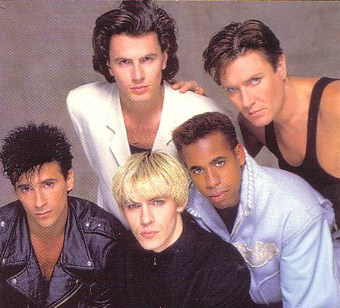
I absolutely agree one hundred percent that any parent should gain a trophy if their children have decent 80's music on their iPods. Growing up with various bands from the era, what I would consider truly successful parenting would be to have bands such as Def Leppard, Bon Jovi, AC/DC, Journey, and none other than Duran Duran on their iPod. Duran Duran has been a big part of my life growing up that I have even vowed to name one of my children Rio after their 1980 hit "Rio"
Originating in England, Duran Duran was one of the most popular 1980's bands. They were so popular that they ended up having 14 singles in the top 10 of the UK Singles Chart, but even more than that have sold over 100 million records. An astonishing feat considering most people at the time thought their lyrics and music videos were "controversial." This little flaw however did not stunt their growth in the music world. Controversial isn't the word I would peg Duran Duran as, although on the sexy side they never shook their hips like Elvis Presley once did. Although the video of "Hungry like the Wolf" could be construed as "controversial," it seems that it is very tame given some of today's more popular music videos.
Even though their spark may have faded in the early nineties, and caused a break up of the infamous band, the band has recently rejoined, and are releasing music. Even though the sound of the band today is quite different from back in the day their most recent record, "All You Need is Now" hit the No. 1 spot on download charts in 15 different countries on iTunes.
All You Need is Now has a distinct difference than earlier songs from Duran Duran, even though they have tamed down the content in their videos, they are still popular for their "controversy".
Earlier this year it was released that Duran Duran would be performing at the Opening Ceremony for the Summer Olympics, which are being held in London, England. Excited and somewhat anxious to see what the band will choose to perform at this monumental performance.
With this huge ceremony ahead of them, I'm hoping that this is not bringing the end of Duran Duran's career. I believe they still have great potential, and will be entertaining audiences for years to come with their up-beat pop culture music. Who knows, maybe our children will even be seeing them play live thirty years from now. Here's hoping...
Audio quality is an interesting term, as it can be both a
fact and a subjective opinion. CDs are very much still in mass production today, but with the advent of commercial goliath: Apple’s iTunes, and growing rivals such as Spotify, hugely compressed .mp3
files have in many ways become the norm. Many people, and particularly the
youth of today have grown to accept this as the best solution for piping music
in to their ears, but the question is: are they right?
The recording and distribution of music has been through
many different stages during the past half century: evolving from analogue
recording methods like vinyl and cassette tape to digital CDs, DVDs and now
Bluray.
“An analogue recording is one where a property or characteristic of a
physical recording medium is made to vary in a manner analogous to the
variations in air pressure of the original sound.” - Wikipedia
“A digital recording is produced by converting the physical properties
of the original sound into a sequence of numbers, which can then be stored and
read back for reproduction.” - Wikipedia
Both analogue and digital systems have limitations, and there is debate
as to which is the best solution, but this a very extensive, ever on-going and
open ended discussion that I don’t want to get in to with this article. The
main point is that both of these methods are used in order to capture music in
as a raw a form as possible. If the resulting product is then presented on a
good enough sound system, it should be a near perfect reproduction of said
original sounds.
The focus of this article will be digital media, and as such a breakdown
of the key steps in producing such a recording is included below (courtesy of
Wikipedia):
Recording ·The analogue signal is transmitted from the
input device to an analogue-to-digital converter (ADC). ·The ADC converts this signal by repeatedly
measuring the momentary level of the analogue (audio) wave and then assigning a
binary number with a given quantity of bits (word length) to each measuring
point. ·The frequency at which the ADC measures the
level of the analogue wave is called the sample rate or sampling rate. ·A digital audio sample with a given word
length represents the audio level at one moment. ·The longer the word length the more exact is
the representation of the original audio wave. ·The higher the sampling rate the higher the
upper cut-off frequency of the digitised audio signal. ·The ADC outputs a sequence of samples that
make up a continuous stream of 0s and 1s. ·These numbers are stored onto recording media
such as magnetic tape, hard drive, optical drive or solid state memory. Playback ·The sequence of numbers is transmitted from
storage into a digital-to-analogue converter (DAC), which converts the numbers
back to an analogue signal by sticking together the level information stored in
each digital sample, thus rebuilding the original analogue wave form. ·This signal is amplified and transmitted to
the loudspeakers. From above, we can see that there are two main factors
affecting the quality of a digital recording: Word Size The number of bits used to represent a single audio wave (the word
size) directly affects the achievable noise level of a signal recorded with
added dither, or the distortion of an undithered signal. Increasing a sample's
word length by one bit doubles its possible values, likewise increasing the
potential accuracy of each sample and the fidelity of the recording to the
original. 24-bit recording is generally considered a current practical limit as
this word length allows a signal-to-noise ratio exceeding that of most analogue
circuitry, which by necessity must be used in at least two points in the
recording/playback chain Sample
rate The sample rate is even more important a consideration than the
word size. If the sample rate is too low, the sampled signal cannot be
reconstructed to the original sound signal. Hence the output will be different
from the input. The process of under sampling results in aliasing whereby the
high frequency components of the sound wave are represented as being lower than
they should be. This causes the output wave shape to be severely altered. To overcome aliasing, the sound signal (or other signal) must be
sampled at a rate at least twice that of the highest frequency component in the
signal. This is known as the Nyquist-Shannon sampling theorem. For recording music-quality audio the following PCM sampling rates
are the most common: 44.1 kHz 48 kHz 88.2 kHz 96 kHz 176.4 kHz 192 kHz When making a recording, experienced audio recording and mastering
engineers will normally do a master recording at a higher sampling rate (i.e.
88.2, 96, 176.4 or 192 kHz) and then do any editing or mixing at that same
higher frequency. High resolution PCM recordings have been released on
DVD-Audio (also known as DVD-A), DAD (Digital Audio Disc—which utilises the
stereo PCM audio tracks of a regular DVD), DualDisc (utilising the DVD-Audio
layer), or Blu-ray (Profile 3.0 is the Blu-ray audio standard, although as of
mid-2009 it is unclear whether this will ever really be used as an audio-only
format). In addition it is nowadays also possible and common to release a high
resolution recording directly as either an uncompressed WAV or lossless
compressed FLAC file[8] (usually at 24 bits) without down-converting it . However if a CD (the CD Red Book standard is 44.1 kHz 16 bit) is
to be made from a recording, then doing the initial recording using a sampling
rate of 44.1 kHz is obviously one approach. Another approach that is usually
preferred is to use a higher sample rate and then downsample to the final format's
sample rate. This is usually done as part of the mastering process. One
advantage to the latter approach is that way a high resolution recording can be
released, as well as a CD and/or lossy compressed file such as mp3—all from the
same master recording.- Wikipedia
Now that the theory has been covered by Wikipedia, I’ll continue.
Personally, I couldn’t disagree more with the idea of mp3 files as
the accepted standard of audio distribution. This is because, despite the
inherent benefits of these highly compressed files, such as the ability to
store tens of songs in the place of just one lossless “CD-quality” audio file,
the algorithm used to compress them to this extent is flawed, and I feel
somewhat disingenuous.
This is because it uses what is known a “lossy” compression
method. This means that data is actually discarded from the original file in
order to achieve optimal size. It does this by using a technique called
perceptual coding, which discards or reduces the precision of sound components
less audible to human hearing, and then records the remaining information in a
fairly efficient manner. At the standard sample rates of 128, 256 and 320 kbps,
the result is a file which on the face of it sounds almost identical to the
original. It will almost certainly not be distinguishable through the average
stock iPod headphones. However, on closer inspection through a decent setup and
professional quality headphones or speakers, many files will begin to show
differences. The files can often sound very synthetic, and have their very own
signature sound. In fact, many actually prefer the distinctive punchy sound the
compression can produce, and more still simply cannot tell the two apart.
The degree to which the compression method harms the
original file can depend on the genre of the music, its complexity and the standard
to which it was produced to begin with. For example, modern electronic music
will often respond better than classical full orchestra piece.
Beyond this perceived audible difference of each file though,
is the matter of principle. After the artists have worked tirelessly in the
studio to perform every second of a song to perfection, the raw recording is
passed on to a very clever and talented professional who will spend days,
weeks, or months tweaking every frequency and channel to a level suitable to
complement each element of the piece to the best of their ability. As a result,
I feel that to then take this hard work and expertise and soil it by discarding
roughly an 1/11th of the data, altering the EQ with gimmicks like
“bass-boost”, and then proceed to listen to it through headphones with the
audio response of two potatoes connected with some rusty fence wire, is simply
wrong.
I’ll admit though, until roughly 4 years ago, I had never
really questioned “lossy” compression or audio quality in general. I would rip
all my CDs in the default compression method of a player and listen to it
through my mp3 players bundled plastic soul destroyers. The changing point was
when I tried my older brother’s Sennheiser HD 25 1 II headphones. These are pretty much regarded worldwide as the standard
for professional sound monitoring. Unlike many headphones, they produce a very
precise, flat response with controlled treble, defined mid and tight bass, thus
meaning that the recording will sound almost exactly as the artist intended.
Even connected to my old 1 GB Zen Stone, I was astounded by just how different
my music sounded. Of course, being the naïve teenager I was, the first thing I
noticed was the bass; something which most standard in-ear buds struggle to
produce faithfully. I listened through all my favourite songs, falling in love
quickly with the new, more dynamic sound; I was smitten. Eventually I got hold
of a pair for myself, and it wasn’t long before their clean and precise
response had me noticing the flaws in the mp3 files, and my entire library of
music was re-ripped in a lossless format.
I’ve been through many different
lossless file types: like WAV (the audio equivalent of a bitmap image file), FLAC
(a lossless compression which uses a clever algorithm to compress audio data to
around half its original size without loss of data), and now ALAC (Apple’s
version of FLAC). I currently own a 160 Gb iPod Classic which is around 2/3
full of music encoded in lossless ALAC, which drives my HD 25s. When I buy an
album now, I can be sure that I’m hearing it as it was intended to be heard, as
and I honestly cannot see why anyone who truly loves music would do otherwise.
Of course, this is just my opinion, and while many may agree with
me, manymore will disagree with me. I’m not
trying to brainwash you or to tell you that you’re wrong to use mp3s, or
standard in-ear buds. I’m merely suggesting that you try the alternative, if you
can. And if you enjoy it, you’re welcome, if not, I’m sorry for wasting your
time.
When asked the question: "What is one band you would love to have seen in their heyday?" I can honestly say that I'd have a hard time choosing. It's difficult to put yourself in a position to choose between dozens to hundreds of great bands from years ago.
My first thoughts led me to Elton John, but I'd argue he is still in his heyday, don't you agree? There's also the very typical "Beatles" response, but I'm never really that typical. I kept thinking about it and finally come to the conclusion that if Freddie Mercury were still alive; what I wouldn't give to be front row screaming the lyrics to Bohemian Rhapsody.
Growing up I would say that my parents taught me what music was: training me with bands like Bon Jovi, Def Leppard, George Michael and Duran Duran. Although these are just a mere few you can begin to see that my musical vocabulary started at a very young age. I've never paid much attention to rap and R&B music (so forgive me if you're a fan). Since then I've grown to love other bands though. In my socially awkward years as a teen I grew to love bands like Death Cab for Cutie, and the Silversun Pickups. Not saying those were wise choices, but they have certainly broadened my horizons somewhat.
Given these great bands (and I've not even began to mention) you might be wondering, "Why Queen?" After maturing, somewhat, in high school I was introduced to other bands that were "vintage." Queen was introduced to me for the first time. I'll never forget the day I went to my Mom asking her to purchase the CD for my iPod. I can say without doubt that it was the best $13 I have ever spent. To me, Queen is the kind of music that gets your blood pumping and touches your soul all at the same time.
I don't know about you, but this song makes me want to put myself right in front of Freddie Mercury and just squeal like a young school girl
Clinging to the radio, hopelessly wishing that I were in the audience of a Queen concert is only the beginning. I really do love Queen, and they will live on through my soul, and the souls of my future children. Words cannot describe how or even why the British rock band moves me in the ways that they do. It's not just the great beats, or even mind boggling guitar riffs that win me over. No, its Freddie Mercury and his words. Lyrics that could shatter anybody's soul if given the right situation. For instance, no one can deny the truth of the lyrics to Fat Bottomed Girls. Not only had this song given hope to me, and every other round bottomed girl, but also helped highlights Queen's more "playful" side.
What really sets Queen apart in my mind is the amazing Under Pressure they sang with none other than David Bowie (another personal favourite). To be able to sit at a concert with those two in front of me would be the perfect way to spend the night. (I would definitely contribute my left arm and leg to seeing this man perform one last time) Seeing one last Queen concert would soothe my soul enough for the rest of my life. I've grown up with Queen on my Walkman then on my iPod, and someday soon into my children's lives. With their powerful lyrics and stage presence I feel they could win anyone over. If only the original Queen was still on tour and filling stadiums today. You'd definitely see me there.
What band or artist would you go see if you had the chance to see one of your choice, still active or not? Tell us in the comments section below!
I realise that this review is about two years late, but if your reading this I'm sure that you realise that that amount of time does not affect the abilities of this product. This product happens to have aged quite well. Bluetooth is still used widely in a plethora of devices such as mobile phones, tablets and laptop computers.
Going by what I've experienced over the last few days, these Bluetooth headphones have been quite convenient for me so far; they seem like they will last me a while (seeing as all my other headsets break at the base of the wiring.) But on to what you came for, the review.
Music Sound Quality:
They provide very high quality audio, the treble is very crisp. There are other brands with crisper and sharper treble but normally at a higher price. However the highlight for me was the bass on these headphones: it is at the perfect level. That is to say that it is there, but it is not overpowered (Which I find with most headphones now) and allows me to fully appreciate the music as a whole.
As for noise cancelling, for a pair of non-noise cancelling dedicated headphones, which by the way are not in ear either, they provide quite a good level of noise cancellation. I mean obviously it's not exactly going to isolate you from everything around you, but it will cut out most of background noise, and the everyday shuffling and ruffling of everyday activities, provided you're listening with the volume above medium.
Call quality:
Although not as good quality as when used for music they are still quite good for calls, they do cancel out most background noise, however when calling I did seem to get lots of background noise through my mic, however I think this may just be an error with my headset, as many others say that the sending quality is excellent. Or it could be an environmental problem such as wind or loud surroundings.
Comfort, Controls and Functionality:
I have to say first, that if this is your fist pair of around ear headphones, they may be uncomfortable at first but after a while you will find a comfortable position to have them. Some people find in-ear headphones uncomfortable and may prefer to get these kind of headphones, the major advantage to around-ear headphones is that they don't tend to fall out easily like in-ear ear buds.
The controls are very conveniently placed and are very easy to use. They can potentially end up being a hassle when adjusting the height and angle of the headphones, since when adjusting you may tend to accidentally hit a couple of them. However the overall functionality was excellent. They were extremely easy to set up (charge, turn on, scan for them, connect) and have not failed me since. The battery life is excellent lasting 7 hours straight (so far) on a single charge and still running strongly.
The overall feel of these headphones proves to be quite comfortable, the headsets stay quite firmly on my ears, and the wire round the back rarely bothers me, however the ear buds themselves are quite a bother, as I have never used this type of ear buds before I think it may be due to my lack of adjustment to them. However they feel very large, and out of place, and trying to find a comfortable spot for them to rest at first seems nigh on impossible to me. Even with this factor, after more adjustment they seem to get comfier every day so it might just be a matter of getting used to them.
The main feature of this device is of course: the Bluetooth connection. This by far is the most convenient part of the device, being able to walk around with no worry of being held down by your cable or accidentally tugging the cable too hard and breaking it or knocking your device out of your pocket. This feature removes all that hassle, which I thoroughly appreciate as all of my previous headphones have broken at the cable end of things not to mention the constant tangling of headphones in your pocket. Particularly useful for people who like to listen to music while participating in heavy exercise as they are more likely to stay put than traditional in-ear headphones.
However even if this is the highlight of the device, it too experiences some problems. Some of the potential problems include: the connection can be lost; sometimes the song doesn't stream quick enough and is jumpy; and there can be a significant delay in changing song and the next song actually playing. But honestly a little lag is to be expected from a wireless device. After all data can always move faster on a wired connection. Considering the problems I've had in the past with wired connections, I will definitely stick with these though.
Another thing about these headphones is that the style is a bit unusual. I mean nobody really wants to look like they are using a 1960’s hearing aid, but once you get past that initial feeling it's fine, anyone who mocks you is probably just jealous their headphones aren't wireless.
By The Numbers -
Music: 8/10
Calls: 7/10
Features/Design: 7/10
Comfort: 6/10
Ease of Use: 8/10
Overall Rating: 7/10
Verdict:
Although they are not the best of the best headphones, I still say these are worth a shot, if you are a fan of over-ear headphones already, or are able to get used to the style of non in-ear-buds. They are by no means poor quality or bad value for money. These headphones are very good quality for their price bracket, especially for: the Bluetooth, the sound quality and the ease of use. I believe that these are one of the highest quality Bluetooth headphones you will probably find for under £50 (At their current sale price), and for that reason I would recommend them to anyone looking to ditch the tether to their portable device or home computer.
Spotify is an online music streaming service in Europe and North America that allows users to stream music from thousands of artists to their computers or phones/tablets instead of having to download all the songs to their memory.
It is very handy for music lovers who are running low on space on their hard-drives and/or phone memory. Spotify's development began in 2006 and it was released to public access in Europe, in October 2008. Free accounts were originally invite only to manage new user growth. Since then Spotify has also launched in the US and has over 10 million users. 2.5 million of those users are paid subscribers.
Accounts
Once you've downloaded the client for your device, you can either use a free account which is ad supported and has certain limitations, or you can sign up for an unlimited or premium account which have extra features and benefits for a monthly fee. Then you can get to listening to your music right away.
To use Spotify on a mobile device you'll need a premium account
A free account would suffice for non-heavy music listeners but for those who listen to music for several hours a day the unlimited and premium account may be worth the fee. For the price of buying one album per month, you get the option to listen at a higher bit-rate, to use Spotify offline by downloading the tracks to your hard drive and the ability to use it on mobile devices.
I have the been a subscriber to the premium service since May 2010 and find it an absolute joy to use, whether I'm blasting some Daft Punk through my speakers at home or listening to various montage-like songs at the gym with my smartphone.
Being able to 'queue' songs is a fantastic feature every music player should have.
Mobile phone users should watch that using Spotify doesn't cut into their monthly Internet allowances, making playlists available for offline use while connected to a WiFi network can help negate using too much data while using Spotify on the go.
Music Catalogue & Playlists
Spotify adds thousands of new tracks daily to their millions and millions of existing tracks by thousands of different artists across the globe. Adding songs to your overall library is as simple as starring any song with a single click.
Sometimes people critique Spotify for not having certain high profile artists such as The Beatles, Metallica or Pink Floyd. While it can be a shame you may occasionally find one of your favourite artists absent, it's not something you should let discourage you from using Spotify, and here's why: All Spotify accounts allow users to listen to their own local music files on their computer as well as the various songs you're steaming in your playlists. So if you really want to listen to a song that Spotify doesn't have (rare, but it happens) then just download it elsewhere and tell Spotify which folder to look in and it does the rest. Simple.
Finding the right tracks couldn't be easier, the search bar in the corner lets users search by: song title, artist, album or playlists.
The ability to create playlists on the fly and add songs to one or more playlists and star your favourite tracks results in a incredibly useful music organising and sharing tool. Any playlist can be shared with others via Facebook or even just a link. You can also make collaborative playlists that allow multiple users to create and edit funky playlists. For premium users you can also check 'Make Available Offline' and Spotify will download all the tracks in that playlist to your device for use should you ever find yourself without an Internet connection. It's all incredibly easy to do, with most of these features being only a couple clicks away.
Social
One of Spotify's biggest advantages is the social integration. As of September 2011 new accounts are required to link to a facebook account. Some might see this as an unnecessary push for those just looking for a music app that don't want to bother with facebook, but how many people out there that would be tech savvy enough get Spotify wouldn't have a facebook account? Most people have one even if they don't use it anymore, and you could quickly make a new account should you not have one when you sign up for Spotify.
Sorry Twitter looks like you've been friendzoned.
The social integration is fantastic though, you can share playlists directly with your facebook friends and see what they've been listening to and what playlists they've subscribed to. If you don't want people to know you've been listening to the likes of Abba or Justin Beiber you can set Spotify to 'private session'. You can also set which playlists you want set public too should you have any embarrassing cheesy 80's playlists kicking about you don't want your buddies to see.
Another social feature is that you can share any track, album or artist on facebook or twitter or send it to one of your friend's Spotify inbox. So if you've just heard a great new song and want to recommend it, Spotify allows you to do so, seamlessly.
Apps
In 2011 Spotify launched it's own Apps centre which allows users to install apps for all sorts of music related apps. There are all sorts of interesting and wonderful apps waiting for you on Spotify. Many apps just aim to help you explore and experience new songs and bands. Others expand on playlist building and sharing such as the 'Top10' app that lets you make different Top 10 lists of songs and share them with your friends. Other apps have totally different functions and can be really useful like 'TuneWiki' which has synced lyrics for your karaoke enthusiasts out there.
At the moment there's only around 15 Apps available, though Spotify have said more are set to release throughout 2012. The apps that are available do contain some interesting ideas. 'MoodAgent' finds playlists containing tracks to match the users mood. Built into Spotify is the Top Tracks and Lists which let users see the current Single and Album charts on Spotify, handy should you be interested in what's popular at the moment. Spotify also handily tracks your music habits and compiles a list of your top listened to artists and songs. You can also see your friends top artists/songs too which can be neat.
The apps are an entirely optional feature on Spotify to enhance your music and listening experience. Best of all they're all free.
Radio
Unlimited and Premium subscribers can also listen to Spotify in radio mode, which is 'A gold mine for discovering new artists.' This is a dedicated radio stream to find and play tracks similar to songs by any of Spotify's artists.
Just click on your favourite artist and it'll automatically pull up and play songs deemed to be similar to that artist as well as tracks by said artist. I've already discovered some great new artists thanks to Spotify Radio.
Sadly it doesn't include actual radio stations, hopefully Spotify will integrate radio support in the future. Although it would be a country by country basis and as such would be both very time consuming and potentially costly.
Spotify's Radio Mode on the Desktop client
Alternative Services
There are alternatives out there such as Grooveshark, Rdio and Rhapsody. Grooveshark is the only one I've tried thoroughly myself, you get more for free than you do with Spotify and it runs in your browser instead of as a programme. It's music library is the main difference though, it's powered by user uploads so while it does allow them to get many different artists, including ones not on Spotify, it does leave the library prone to duplicates and poor quality uploads and user-errors like spelling/name mistakes. Unlike Spotify, Grooveshark is not completely licensed which means artists may not benefit at all from appearing on Grooveshark. Also please note this does not make Grooveshark an illegal music service.
'There is a distinction between legal and licensed. Laws come from Congress. Licenses come from businesses. Grooveshark is completely legal because we comply with the laws passed by Congress, but we are not licensed by every label (yet). '
- Paul Geller,Grooveshark’s Sr. VP of External Affairs, in an open letter to the music industry regarding Grooveshark’s legality.
Each music service has it's own advantages and disadvantages but from the ones I've seen, experienced and read about; Spotify offers the best features, look and seamless functionality to me.
Verdict
Spotify isn't for everyone. It's not particularly worth it for people who rarely listen to music and it's definitely not for those who are very rarely or never with an Internet connection. Spotify is an online service and can not be properly utilised if you don't have regular access to the Internet.
But for those with frequent access to the Internet, Spotify can be a wonderful music player and tool; especially for those willing to cough up £5/£10 for the unlimited or premium subscriptions. It's a well designed, fast and functional client that can enhance the user's music experience. It covers it's bases for audiophiles by allowing higher bit-rates (paid subscription only) and use of local music files on your computer or device. It feels like they've thought of everything and the music catalogue which contains over 15 million tracks is just incredible. Spotify have done away with needing gigabytes upon gigabytes of storage to store huge music libraries and the social integration has the potential to open up anyone's music tastes and enjoyment of sharing different songs with friends without having to keep a hundred different youtube or last.fm tabs open in your internet browser.
You don't have to take my word for it, why not download and try out Spotify for Windows/Mac for free: here
Thursday, February 23, 2012Alasdair "sdair" KerrNo comments
Artist of the Day: Shinichi Osawa
Who is Shinichi Osawa you may ask? Well today I will introduce you to the world of 大沢 伸. Shinichi Osawa is a Japanese electronic artist, who mainly bases his music in the Acid jazz, House, and Electro house sub genres. There is a good chance that you may never have heard of him. He isn't completely unknown to the UK, afterall he was voted as one of Top 100 Japanese Pop Artists by HMV.
Shinichi Osawa started his musical career in 1991 as the leader and bassist of Mondo Grosso, a musical group which was highly popular in Japan. However, in 1995 after they release two official albums Mondo Grosso was disbanded. After the break up Shinichi Osawa started to do much more solo work, this lead to him making the album “Closer” in 1998 which was his first attempt at an Acid Jazz/House combination. Although it was not a very big hit, it did help him form his unique style of music. The same can be said about his second solo album MG4 released in 2000. Although it did not properly take off, it did reinforce his style of music.
Osawa was also involved with the gaming industry for a while, he provided the hypnotic array of techno music for the popular PSP puzzle game Lumines in 2005. However, he did not compose anything for its sequel.
Then in 2007 his career started to take off, he moved to the record company avex trax and released his hit album “The One” under his real name. This then gave him international fame allowing him to play at such venues as the Electric Daisy Carnival a huge Electronic festival in the USA.
Songs such as “Push” really show how well he combines in factors from House, Acid Jazz, and a hint of funk and post-rock mixed in.
Shinichi Osawa then went on to make his second album under his own name, SO2. Like most his other albums, it was based around Acid Jazz, and House. However he also added a dash of ambient music style in this album giving it a more peaceful vibe. Although it was not as far reaching as “The One”, SO2 was still a big hit in Japan earning him the place of #95 on the top 100 Japanese pop artists.
It'd be hard to argue Shinichi Osawa is not an innovator for electronic music. He created a new style of music, and was still not afraid to modify it and create a new and improved beast. I personally cannot wait for him to release a new album, and I'm convinced it will be another great success.
Give them a listen and if you like what you hear please support them.
Saturday, February 18, 2012Michael PalmerNo comments
Music Feature: Push yourself to listen to something new
Music is something that has always been a huge part of my
life. To me, it's not just a happy melody to enjoy in the car, or a beat to
dance to. It can affect me in truly profound ways; make me feel immense joy,
remind me vividly of past events, give me hope and determination, or even
overwhelming sadness.
Beyond that, I've always found that I tend to enjoy music
for reasons which are often completely overlooked by many others. I hear the
intricacies in complex bass-lines, the depth of multi-part harmonies, the
dynamics that playing in an abnormal time signature can create. As a result of
this, I find myself enjoying a rather eclectic mix of genres: hip-hop/rap,
metal, progressive rock, dance, pop, jazz/blues and classical. I rarely avoid a
band based on their genre alone.
The other odd thing about me is that I tend to overlook
the lyrics in most songs. Not deliberately, but because they almost always take
a back seat to the music in my mind. Don’t get me wrong, I still enjoy
listening to lyrics, and I certainly respect many artists for the sheer poetry
of them. I simply find myself distracted by the vocal melody. If a band’s
singer is particularly lacklustre, or uses very unimaginative vocal melodies,
they will most likely not interest me. It’s very unlikely that I’d listen to a
song which was essentially a poem, sung with a half hearted vocal melody
composed of only a few notes, accompanied by a few basic open chords strummed
in the most basic 4/4 rhythm.
I've often felt that people can fall too easily in to
listening to only one style/genre of music. For example: they hear an IronMaiden song for the first time through a friend, and are intrigued; they then hunt
down and absorb their entire repertoire. They then decide that they are
officially a "metal-head", and begin listening to other key bands
within that genre like Metallica, and eventually move on to newer additions
like Slayer, Slipknot, Trivium etc.
First of all, I'm not in any way discrediting these bands, or that genre of music. I only use this as an example, as it's one that I've encountered the most. I've met many people who have become so entwined in the work of a select few heavy metal bands, that when someone mentions that they like Radiohead, or The Beatles, they are shot down immediately and dismissed with comments like: "That stuff's too tame.", "Boring...", "Those guys don't shred, they're such bad guitar players!"
This really digs at me. I’ve been playing guitar on and
off for about 7 years now, and I spent most of that time drawing inspiration
from guitar players like Joe Satriani, Steve Vai, Eric Johnson, Paul Gilbert
and John Petrucci (to name few). I’m not
claiming to be an excellent guitar player, but I know good playing when I hear
it, and in my personal experience many people just don’t. Many will rave on
about solos from new age indie/rock/pop/whatever the hell genre they are bands
where the lead guitarist will simply play the same chords used tirelessly
throughout the rest of the song, but, wait for it... really fast! Yeah,
I’m not impressed...
This goes one step further, whereby many people can’t
seem to separate what are indisputably the best guitar players on the planet,
from guitarists who are pretty good but write very good songs. An example of
this would be Led Zeppelin. They are undoubtedly an iconic band; they have
produced some of the most important rock songs ever. The problems arise when
fans use this as an excuse to name Jimmy Page as one of the the best
guitar players ever to have lived, when in fact many of his solos were in fact
quite limited on a technical level. I’m not saying that for a solo to be good,
it needs to be complex, I’m simply making the point that any of the guitarists
I mention above could play these “amazing” solos in their sleep. They are more
talented, more technically accomplished,and deserve a lot more recognition.
Anyway, I feel I’ve digressed somewhat. The main point
I’m trying to make with this article is that I feel that often truly
spectacular music is overlooked by the masses; their views, taste, and
understanding biased by the media. The most recent culmination of this problem,
was in my opinion, the outcome of the recent Grammys. My favourite band: DreamTheater, were nominated. They are undoubtedly some of the most talented,
technically proficient virtuosos ever to form a band. They have over their 27
year existence, produced 12 spectacular studio albums, and have truly set the
bar for modern progressive rock/metal music. Their ability appears limitless;
switching seamlessly between style, time signature, rhythmic pattern, tempo,
usually all within one song. The result of this being that every album of
theirs is a magnificent musical journey.
Of course, the Grammy’s being the almighty mainstream
parade that they are; every award in the Rock/Metal category was snatched up by
the Foo Fighters. Now, the Foo Fighters are a good band, with some truly
brilliant songs, but really? Every award in the category? Come on...
It was a similar story in many other categories too. With
“Glee: The Music, Volume 4” being nominated for Best Compilation Soundtrack for
Visual Media. Now, Glee gets a lot of stick, frequently accused of being
entirely commercialised and fake. This is to some extent true, but the actors
really can sing, and many have utterly brilliant voices and have starred on
Broadway. Furthermore, despite how much they are put down by narrow-minded diehard
fans of the originals, many of the Glee covers of classic songs are actually
pretty damn good. In fact, musically, they are often better realised than the
original tracks, as they are performed by such amazingly talented studio
musicians, and produced to such a high standard (There,
I said it. Shoot me). All of this aside, I’m not convinced that Glee really
deserved a nomination, when so many other great soundtracks were clearly
overlooked.
Another result that annoyed me was the Best New Artist
category. This was won by Bon Iver: a pretty good band, but not exactly ground
breaking stuff. They were nominated along with Skrillex, who varies in quality,
but is generally just substandard drum and bass akin to the sounds of Transformers
on steroids. Also, Nicki Minaj, who is responsible for such unforgettable
classics as “Stupid Hoe”.This bugs me
because bands like Hakenand Aspera/AboveSymmetry have come in to being around the same
time, showcasing extraordinary ability and promise in the progressive rock /metal scene, and the latter doing so at only 19 years-old.
This is the sad truth about the music industry: raw
talent simply isn’t appreciated as much as it should be. The awareness and
success of artists who push the boundaries of musicianship and creativity is
diminished by over-hyped celebrities with very little aptitude, who rely
heavily on excellent studio musicians, computers and audio mastering wizards to
produce anything vaguely good.
It’s not all bad news, though. Bands like Dream Theater
still exist and continue to flourish in their own way. Those determined enough
will continue to break through the restrictive walls of the media, and seek out
and enjoy truly good music. It’s all too easy to sit back and allow Radio 1 DJs
to feed you what they have decided is the
must have music of the time. Given, sometimes they do actually get it right.
But if you regard yourself as a true music lover, and find your ears craving
for more meaningful and exciting sounds, then you must take things a step
further and try new genres.
Go in to a music shop, whether it is physically or via
the wonders of the internet, and pick up something from the opposite side of
the shelf. If you normally plod straight over to the chart section, why not try
some metal? If you enjoy dubstep, why not find out where it all came from and buy
a drum and bass compilation? If you enjoy guitar driven hard rock and metal
like Metallica, why not listen to Kirk Hammet’s teacher, and guitar superhero:
Joe Satriani?
Perhaps these are bad examples, and I’m not promising
that this strategy will work every time, but eventually you’re bound to uncover
treasure troves of musical delights you’d have never imagined yourself
enjoying. There is so much good music out there to be discovered, and if you
are like me, a musical explorer, I salute you. If you are stuck in a rut, bound
to a single genre, or struggling to find new things to listen to, then I hope
that this article has in some way helped. I hope that this will only be the
beginning, and I intend to write more, showcasing both my all time favourite
bands/songs, and updating you on any and all interesting new finds as they
happen.


 If there is anything negative to be said about this record, it’s that, while there have been no real steps backwards for the group, it doesn’t seem to build upon the band’s discography as much as their past releases have. In other words, L’Enfant Sauvage brings practically nothing new to the table for the band, musically. While this isn’t necessarily a bad thing for most fans of the group, if you’re like me, you may have grown weary of the Gojira’s sound from extensive listening to their past efforts. While that may reflect personal change more than it does the musical prowess of the band, this past album seems to exhibit less development than any of the group’s previous releases have, and, because of this lack of evolution, listening to L’Enfant Sauvage may not be anywhere near as mind-blowing as their past two releases were the first go-round if you are already familiar with the work of Gojira.