Five Great TV Dramas To Watch This Summer

Here Emma D picks five of her favourite TV Dramas that she recommends you check out

Bittersweet Mondays: Weekly Webcomic

Confab presents the brand new Bittersweet Comics debut with the first of a weekly web-comic series.

Game Review: Serious Sam: The Second Encounter HD

Sam returns in a remake of the 2002 classic sequel, how does it stand up?

The Sexism of Horror Video Games

The history of sexism in video games is almost as old as games themselves, Emma D discusses the underlying sexism of the horror genre

Film Review: The Amazing Spider-Man

Spidey's latest outing hits the cinemas, does this reboot make a name for itself or is it just another cheap Hollywood cash-in?

Volunteer: A Career for the Unemployed

With high rates of unemployment across the globe, Charlotte explains why now is a great time for the jobless to volunteer!

Overrated: The Legend of Zelda Skyward Sword

Claimed by many critics as 'The Best Zelda Ever!'. Long time Zelda fan Emma D argues why it didn't live up to the hype.

Showing posts with label nintendo. Show all posts

Saturday, 28 July 2012

Game/Tech Review: Nintendo 3DS XL System

It's certainly bigger, but is it actually better?


Way back in March of 2011, when the 2012 Olympics were still far enough down the line that the horrendous logo wasn't plastered on everything under the sun, Nintendo released their next generation of handheld video game consoles, the Nintendo 3DS. Many eager gamers lined up for midnight launches across the country to get their hands on the new fancy 'glasses-less 3D' system. Despite the heavy anticipation and hype surrounding the system, the 3DS saw fairly lacklustre sales in its opening months, perhaps it was the wallet-devouring launch price of £220-£230, maybe it was the lack of must-have AAA game titles or it could have been the lack in significant aesthetics and name from Nintendo's previous DS handheld models, the Nintendo DS, DS Lite and DSi appearing to be just another revision rather than a fully new, more powerful system. Whatever the cause it prompted Nintendo to act quickly and slash the retail price of the 3DS to a far more acceptable £149.99 in stores, this new price cut and a handful of new must-have titles such as the Zelda: Ocarina of Time 3DS remake inflicted a huge and healthy spike in 3DS console sales.

Fast forward to now, the end of July 2012 and Nintendo have released a hardware revision of the 3DS, just 18 months after the 3DS launch. This revision, the 3DS XL's main selling point it commands is the 90% larger screens, 'the largest screens ever on a Nintendo handheld' the adverts boast. The top screen stretches 4.88 inches diagonally and the bottom touch screen at 4.18 inches. The original 3DS displays came in at 3.53" and 3.02" respectively.


Having played a few different games on the top screen, I've already begun to appreciate the larger, less reflective screen, 3DS games look great on it and the 3D works even better than before, with a larger 'viewing window' thanks to the screen size boost, this 'sweet spot' for the 3D is much more accessible. I often found myself holding the original 3DS closer than I would like to see more of the detail or get the best out of the 3D. Thankfully the 3DS XL can be played from a more comfortable distance without feeling the need to bring the system closer.
Up close however the 3DS XL does highlight the fairly low resolution (400x240 or 800x240 with 3D) of the top screen. If you look closely enough the pixels are far more visible to the human eye than they were on the 3DS. As Nintendo opted to keep the screen resolution the same some games can appear slightly more pixelated or 'jaggy' but I never found it to detract from my gameplay sessions, in fact, I found myself somewhat more immersed in games than I had been with the original 3DS.

Alongside the behemoth sized screens Nintendo has given the main body a slight makeover, gone are the fingerprint magnet glossy coats and instead, we're treated to a more premium and in my opinion, more attractive dual matte finish in black and either metallic Blue, Red or Silver. The stylus (which is now one solid body rather than the telescopic 3DS stylus) has been re-positioned to the right-hand side, in a move mirroring the DS to DS Lite stylus relocation, which is far more accessible during gameplay. Scrambling to find the stylus on the back of the original 3DS during gameplay was either hectic or game-pausing, the experience is far more seamless now.

The face buttons have seen some minor improvements, which now feel more clicky and as a result ever so slightly more responsive. The D-pad has received a minor size increase and due to the larger 3DS body, is far more practical to use in games, the original 3DS' size and shape made using the D-pad cumbersome and even cramp-inducing, so far I've had no complaints about using the D-pad on the 3DS XL. This brings me to the overall ergonomics of the unit, the console feels much sleeker and more comfortable to hold than its predecessor, which had protruding square edges and corners which I found didn't get on well with my gaming palms. This one fits far more elegantly into your hands and doesn't overstay it's welcome when playing for longer periods.


The lack of a second analogue slider pad is disappointing but I'd be lying if I said it was a deal-breaker, there are only a handful of games that make use of the Circle Pad Pro accessory for the 3DS, which I primarily used as a means of acquiring a more comfortable grip for my original 3DS. Nintendo announced a 3DS XL Circle Pad Pro would be released later in the year for those who refuse to play Metal Gear Solid 3, Resident Evil Revelations and the other couple of games without dual analogue action. Oddly the 3DS XL also lacks a power supply in the box, while this may benefit the size of the box and production costs it does leave new 3DS XL owners without a means to actually charge the system, Some retailers have bundled it with the system or it can be purchased separately for less than a tenner, the box subtly alerts consumers with small warnings as to the lack of a charger. One thing I felt the original 3DS did right was the inclusion of a plastic charging cradle users could effortlessly dump their console into charge when they were done gaming, without the need to fiddle around and plug in the power cable, sadly Nintendo has opted out of including a cradle for the 3DS XL in the box, although it is available for cradle lovers to purchase separately along with the missing charger for a questionable £20, I guess that's what Nintendo consider the price of conveniently charging your portable games system.

As well as all the aesthetic and ergonomic improvements Nintendo have also shoved in a larger battery for good measure, an inevitability really when those larger screens are going to need more precious energy. The battery life actually improves and last an hour to an hour and a half longer than the original 3DS on a full charge depending on brightness and wireless settings, a welcome upgrade considering the original 3DS' battery life wasn't great which goes against the grain for a Nintendo handheld.

Many of these improvements help fix many of the issues I had with the original 3DS and as a handheld, the 3DS XL feels far more suited for longer gameplay sessions. However, there are still a few areas the 3DS XL leaves me wondering why they didn't touch them up too. The cameras are as still shockingly bad as they were back on the DSi and original 3DS: grainy and low-quality, and I was disappointed the analogue slide pad isn't coated with a more grip-able texture though it's far from unusable. The sound levels coming from the unit's speakers were almost if not entirely identical to the original 3DS speakers, even at maximum volume it's not particularly loud and doesn't impress the ears. Of course, the use of headphones can alleviate this problem but I'm not one to wear headphones around the house which is, which is where I spend the majority of my 3DS gaming time, despite it being portable.


Perhaps it's all due to my issues with the original 3DS but when it comes down to it, I'd be hard-pressed to argue that 3DS XL's improvements aren't significant enough to recommend it over the original for first-time buyers looking to buy a Nintendo 3DS. The longer battery life and the more ergonomically satisfying form factor were enough for me to opt for an upgrade from my 3DS. The larger screen is definitely a bonus too, especially for the glasses-less 3D.  For others considering upgrading, I'd still recommend if like me, you find the original 3DS' comfort levels just aren't adequate enough for something designed to frequently fit in your hands for various periods. If you're still happy enough with your original 3DS and don't have the cash to spare then stick with it. A substantial influence on my decision to upgrade was a local retailer's surprisingly generous trade-in value for the original 3DS when put against the new 3DS XL. The lack of including a power adaptor is a confusing move by Nintendo but a problem that can be easily and cheaply solved. Those looking for more power and higher-end graphics closer to the likes seen on home consoles may be better suited to Sony's marginally more expensive offering, the PS Vita.


Product: 3DS XL
Manufacturer: Nintendo Co. Ltd
Release Date: 28/7/2012 (Europe/Japan) 19/8/2012 (North America/Australia)
Retail price: £179.99 (UK) $199 (USA)
Colours Available: Red+Black/Blue+Black/Silver+Black (Europe/Japan only)

The Good:
+ Playing games on the new larger screen looks and feels great
+ Less glare/reflection on the top screen
+ Glasses less 3D simply looks and works better thanks to the larger screen
+ Improved battery life
+ Nicer Dpad and face buttons and proper start/select/home buttons
+ The units sleeker and more rounded edges make it more comfortable to hold for prolonged gameplay sessions
+ Stylus now far more accessible during gameplay
+ Fewer fingerprints thanks to the matte finish


The Bad:
- Heavier and less portable
- Still the same low screen resolutions
- Some games can look slightly worse on the larger screens
- Lack of a second analogue slider pad feels like a missed opportunity
- No charger in the box
- No significant improvements to the mediocre speakers
- Incompatible with many 3DS accessories (including circle pad pro)

Friday, 13 July 2012

Game Review: Mutant Mudds


Mutant Mudds brings us back to the old-school retro style look, and it's a game that should be played by all seasoned players! This one was supposed to be released as a retail title on Nintendo DS as Maximilian and the Rise of the Mutant Mudds, but sadly, that didn't happen. The project was then moved to Nintendo's DSiWare service, but ended up not going there either. The game eventually found a home on the Nintendo eShop and PC, under its current name today. It's been a long time coming, but it has been worth the wait!


This game is developed by Renegade Kid, the team that worked on popular games such as Dementium and Moon for the Nintendo DS, and is lead by Jools Watsham. Mutant Mudds is an old-school platformer, where your objective is to eliminate the invasion of Mutant Mudds that have landed on Earth!


The player controls Max. Max is equipped with a jet pack, allowing him to hover across areas he can't do by just jumping alone (which is very similar to Gargoyle's Quest on the Game Boy). Also equipped is a water cannon to help eliminate enemies. There are 40 levels spanning across 5 worlds in the game, which includes main, secret and boss levels. Each main level has 100 jewels, and a water sprite in all levels to collect. Mutant Mudds difficulty is harder than first expected. The level design is done extremely well, and the environment of the enemy's moves takes a while to get used to. There are warp panels that allows Max to further away or closer towards you, which may alert some players like myself of where you are and where you're actually going (believe me, I got tricked at a couple points near the end of a level because I thought I was touching the water sprite, but really wasn't!). Also, each level has to be done on a time limit, which may put some pressure on players to get everything in that level. Each level has a secret area, which is marked either G-Land or V-Land. These secret level doors actually has an influence to the Game Boy and Virtual Boy. Fortunately, when you enter these secret doors, the time resets. If you die in these secret areas you immediately go right back to the beginning of it without having to start at the beginning of the main level itself. In terms of collecting things, you only need to collect the water sprite itself. However, that doesn't mean you will go without a challenge, as the secret areas may be harder than the main areas, bringing veteran players to the test.


Mutant Mudds has great usage of the 3D feature, with at least three layers put into it. The 3D fits quite well with the colourful, retro layout. Another thing that gave me quite the appreciation is the chiptune music, which is an added bonus! Going to the game over screen a lot of times usually is frustrating, however with this one, the music really touches my heart and is one of the most memorable tunes I've heard in a long time!


If there is any complaints about Mutant Mudds I have, it's the lack of items and objects. There is only three available right now, which is not much. If it had a variety of weapons and/or objects of such like in the Mega Man games, then players would have the ability to pick the weapon of their choice.


Conclusion


Renegade Kid has made Mutant Mudds is a game that can't be missed. It's clever level design and its difficulty makes this a must download purchase. Although, the initial game is fairly short, there will be extra levels added soon. If you're a fan of these types of games, or someone who is looking for something new to play, go download this now and experience this terrific retro-style platformer!


Publisher: Renegade Kid
Developer: Renegade Kid
Genre: Platformer
Platform: 3DS eShop (Reviewed), PC
Players: 1
Release Date: 21st June 2012
Price: £8.00/$8.99


By Vernon Schieck

Monday, 9 July 2012

Game Review: Family Tennis 3D

Family Tennis 3DS eShop Review


ARC System Works recently brought its first 3D entry of the Family Series to the Nintendo 3DS eShop. The Family series first appeared on WiiWare, but they were just average or below par than what 3DS gamers had hoped. However, this title follows a whole new format so read on to see how this one did:


Family Tennis 3D brings us those same familiar characters that we saw in the other Family games. In terms of game modes, there is: Quick play and game play. Quick play throws you into a quick casual match against an opponent randomly chosen, and set usually at two games, one set matches. This mode is a good way for you to get used to the game. In game play, you have the option of choosing either free play, tournament, and minigames. Free play allows you to select singles and doubles, as well as the characters and the option or how long you want your game to be. Tournament mode provides you a series of matches on the difficulty of choice. You can only select higher difficulties if you completed tournament on the lower ones. Finally, minigames allows you to pick between three different options that has an objective of trying to get a higher score than your opponent. In terms of other features, unfortunately there is no multiplayer, which will probably set other players, along with myself disappointed there is none of that in this Family series entry.


The games controls allow the usage of the circle pad to move your character. It's a shame there is no option to use both the d-pad and circle pad. Additionally, the movement is wonky at times, making it difficult running to get the ball and hitting it. It seems you character dives down almost every time you do both actions almost or entirely at the same time. Also, some of those opportunities to do a smash hit sometimes goes over the area mark, making these efforts frustrating at some of these moments.
The 3D capabilities are at least decent, but do not exceed what I was expecting. It is not terrible by any means, but the developer could have added more more layer or depth to the game. The animations are good though, and the additions of viewing replays after every score, as well as the ability to change camera views are welcome additions.


Conclusion
Family Tennis 3D at the core is a passable tennis title, but does not rise to the quality tennis fans would hope for. The game's often poor controls and lack of controller options makes me difficult to recommend this game to 3DS owners. There is an option to set it to easy mode, but unfortunately it doesn't make much of a difference. Unless you are a huge fan of all of ARC System Works past games in the Family series, it's best shy away from this title and to just save your cash something such as Mario Tennis Open for your portable tennis fix.


Developer: Arc System Works
Publisher: Arc System Works
Platforms: 3DS eShop 
Genre: Sports
North America Date: 5th July 2012 / 
Europe & UK Date: TBA
Price: $6.99


- Vernon Schieck

Tuesday, 3 July 2012

Overrated: The Legend of Zelda: Skyward Sword


As a long time Zelda fan, last November I eagerly awaited the release of The Legend of Zelda: Skyward Sword, unconvinced by the graphics in the screenshots which had been released but with an open mind; I had already been pleasantly surprised by Windwaker's cel-shading despite being initially sceptical. As it turned out, the less than spectacular visuals were one of the more minor objections I had to the game when I came to play it in full. It must be said now that Skyward Sword seems to have had a 'marmite' effect on the vast majority of Zelda fans. Many, perhaps even most, have hailed it as the best in the series, and the game has been met with gushing critical reviews; it scored 93 out of 100 on Metacritic and 10/10 on IGN which labelled it a 'masterpiece'. Some fans have accused it of not 'feeling' like a Zelda game but that it is still 'amazing' (Zelda Universe forums). I have to admit to being slightly baffled at the response to the game after having played it.

The controls have split the opinions of many reviewers. Zelda Universe begins by describing them as 'one of the mixed parts of the game', going on to state that they 'aren't completely horrible but 'just unpolished'. IGN on the other hand, claims that they are 'the purest, most perfect realisation of Nintendo's ambitious goals for motion-controlled gaming. I found myself somewhere in between these two positions. While I found that the controls were innovative and exciting, there were various times when the Nunchuk was unresponsive or had a delayed reaction (particularly during the last fight). The bow, as in Twilight Princess, was remarkably accurate but where the real difference was apparent was in the sword. The Wii Motion Plus allowed Nintendo to finally cash the cheque they wrote with Twilight Princess, creating truly responsive and realistic swordplay.


I don't want to spend too much time talking about the positives of the game (of which there are many) as there are plenty of reviews showing nothing but these positives turning a blind eye to the faults, which to my mind are glaring and numerous. The first of these I would like to address is the graphics. I understand that there were many complaints that the Wii struggled with Twilight Princess's realistic style and so to circumvent these issues Skyward Sword adopted the impressionistic style. As I already mentioned I had seen screenshots of the game prior to playing my own copy and was relatively unimpressed. Official Nintendo Magazine swooned at the sight of them but I just found them to look unclean. When I saw them upon first playing the game I was utterly disappointed. It is by far the most colourful of the games and in the larger areas, where things are far off in the distance it looks much better. However, as I first looked around Link's room, I was in disbelief at what to me just translated as a lack of detail, rather than the artsy, abstract effect that Nintendo seemed to have been aiming for.


After exiting the building there was the usual annoying tutorial to learn the controls, for which I can forgive the developers, despite wistfully looking back at Majora's Mask and its distinct, welcome lack of it. It is here the story begins.
Skyward Sword sets a new, important benchmark for Nintendo. Modern video games have made significant strides in how they present stories to audiences, and it seems as though Nintendo has finally taken notice. At times they are downright captivating with their picturesque settings and powerful drama. The game lacks voice acting as always, but characters' emotions shine through regardless, and the framing of scenes is incredible- (IGN.com)

It was alright. I felt a bit like Mario getting to the castle discovering a bunch of Toads instead of Princess Peach every time Zelda ran off. It has been said that the character development displayed in this game is the best the series has seen so far, which I can only meet with a guffaw. It is true that there is some great character development on display, the problem is that it is limited to one character. Groose is the only Skyloftian who goes through any gradable transformation in the game. He is one of Nintendo's success stories, driving much of the humour in the game and moving from a completely unlikeable jerk to a character you are rooting for. There is a change in the Zelda character of Skyward Sword but I don't think you could go as far as to call it character development. She could be likened to Midna in Twilight Princess in that she seems to go from one extreme to another in a binary fashion. Skyward Zelda is a bit pushy (literally...) and annoying until she gets swept away and as if a switch has been pressed she becomes saintly. The rest of the characters are rather like the island folk in Windwaker. They will say a few different things if you talk to them, but nothing to make you feel as if what you do affects what is going on in any tangible way. In fact, that is only true of some of the Windwaker characters, you can actually matchmake and improve the shop in Windwaker through character interaction, as well as steering Mila away from a life of crime. Both Windwaker and Twilight Princess come much closer to reaching the benchmark set in 2000 by Majora's Mask in terms of character development than Skyward Sword ever does.


Probably the most irritating and 'un-Zelda like' aspect of the game for me was the map. I wouldn't accuse the game in general of being un-Zelda like at all, as it falls back on some old standards of the series (which I will discuss later). The map however was incredibly off-putting. You have the Sky area which consists of Skyloft, the Lumpy Pumpkin and the Thunderhead. Everything else is random rocks, making the flying part of the game feel like a bit of a waste of time. If there had been a couple more settlements or more to do in the sky I think the game would have benefited greatly. The surface world comprises of these three areas that are totally inaccessible from each other while on land. In other words, every time you want to go between areas, you have to go back to the sky world and then fly to the other area. The disjointed nature of the landscape made me feel like I was playing Eternal Sonata rather than a Zelda game. It is suspected that it was the criticism of Twilight Princess as big and empty that led Nintendo to adopt this kind of map, however, I think that the setting of the former felt more realistic and more suited to the adventure genre.


Much had been made of Skyward Sword's attempts to move away from the standard two-part, dungeon to dungeon format of the series prior to the game's release. It is fair to say that it achieved this to some extent. The usual pre-dungeon quests are much lengthier than in any of the previous console Zelda games and correspondingly the dungeons themselves are much shorter. The standard enemies such as Bokoblins and Deku Babas have become much more sophisticated and combat with them is now strategy based. However, when it comes to boss battles many of the old Zelda tactics rear their heads, the most obvious example being Tentalus, whose eye could have been replaced with an 'arrow goes here' sign and it couldn't have been more obvious. Each item you find in a dungeon is, as always in Zelda, used in that dungeon in order to progress. Many of the same weapons appear; it wouldn't be Zelda without the sword, bow and bombs. The bombs do get a bit of an upgrade though, you may roll them across the ground like a bowling ball to varying degrees of success. The bomb-wielding aspect of the controls caused a few hair-pulling, swearing tirades during one boss fight. One fantastic addition, however, is the beetle, which allowed me to check out all corners of the room before deciding what my next move would be.


Overall, Skyward Sword is not a bad game. It can be entertaining in places and has a couple of genius pieces of composition which lend the game personality that its characters often fail to deliver. Had I played it without the expectation that always accompanies a Zelda game I may have been pleasantly surprised. Compared with other hallmarks of the series, however, I feel it fails to match up to their high standards. Although it is visually more colourful than any of the other games, it is less colourful where it really counts and so for me, does not deserve a lot of the high praise it has been awarded from most corners.


- Emma-Lee Davidson

Monday, 2 July 2012

Game Feature: Zelda Marathon Charity Fundraiser

Gamers raise over $10,000 for children's charity


The Gametoaid Zelda gaming marathon fundraiser finally came to a close Sunday evening/Monday Morning, a staggering 86 hours after its Thursday debut. 


The group of students in Adelaide, Australia hosted and streamed their live Zelda video-game marathon over the weekend. The group raised a GametoAid record-high $10,750 for Child’s Play charity from nearly 500 donations worldwide. 

We first started GameToAid in late 2010. Inspired by groups like ExtraLives.org, we thought it'd be fun to do our own marathon and raise money for a great cause. In every marathon we've run since then, we strive to improve the quality of the stream and make it more smooth and entertaining. I've wanted to do a Zelda marathon for a while, and we finally got around to doing one this time! - -Toby Zerner, GameToAid 


Team Beedle and Team Tingle, named after characters from the game series, played competitively over the course of the marathon, aiming to be the team to finish each title first. Both teams' game screens were streamed live on Twitch TV to viewers across the world. 

The live stream view on Gametoaid.org 

One of the charity marathon's biggest strengths was the high-level interaction with the community. Viewers were able to vote in polls, submit fan art and communicate via the stream's built-in chat service. The group always had a constant view over the chat and regularly responded to questions and comments from the community as well as taking suggestions. There were also contests held where donated prizes were raffled off at random to donors.


Toby Zerner from GameToAid said he was thrilled with the success of the marathon and the level of activity in chat. 
"Everyone in the chat room was extremely encouraging and enthusiastic and it was a truly awesome experience to be a part of." - Toby

GameToAid also implemented a unique donation dependent feature called 'Chance Time' which occurred for every $100 in donations. The 'Chance Time' was a custom made roulette of actions that would randomly select: an individual or group of people involved, an activity and a subject/object. Chance Time resulted in many different occurrences from special challenges like playing blindfolded or result in a team having to act out a famous internet meme. Particular highlights included Team Beedle running around the block, everyone singing about doughnuts, one member eating Vegemite on Weetabix and everyone dancing and singing to Rick Astley's 'Never Gonna Give You Up'.


The final poll on the GametoAid site asked viewers which of the six The Legend of Zelda titles that the group had fought through from start to finish was their favourite to watch. Majora's Mask narrowly beat the marathon finale, Windwaker by just two votes. Had the poll been put up after Team Beedle finished The Windwaker, the results may have differed. Windwaker would have surely earned a few more votes after Team Beedle's player beat the final boss in the game, while blindfolded which also resulted in a few hundred dollars more in donations rolled in and an explosion of enthusiastic cheers in the chat room.


Blindfolded Windwaker final boss battle


IMustConfab's very own Michael Johnson also acted as one of the moderators for live stream's chat. He commented on the marathon's success:


It was so much fun watching the guys play through six different Zelda games plus acting like dorks at the same time. So many laughs and smiles were had from George Rage Quitting to Toby beating Wind Waker blind folded! It's such an amazing thing for them to do for charity and I can't thank them enough. Also this was probably one of the easiest marathons to mod as 99% of the time all the chat members were great. Everyone who donated should be proud of themselves for supporting charity and breaking the previous GametoAid donation record. - Michael (Slurmee)

GametoAid's fan art section was incredibly popular throughout the marathon and resulted in over 500 images over a dozen pages of submitted content from fans, which ranged from hand-drawn pictures to Zelda related internet memes. All fan art submissions were displayed live on the stream for viewers to see shortly after they were approved by GameToAid.


This fundraiser serves as a nice reminder that gaming does, in fact, have its benefits to humanity and is perhaps not as bad for us as many media corporations have made it out to be. It also shows how charitable some people can be, with an average donation amount of $22.36 (£14)
GameToAid expects to hold another gaming charity marathon later in 2012 and encourage interested fans to subscribe to hear about any future updates on their website.


- Ben Carron


Sunday, 1 July 2012

Game Review: The Amazing Spider-Man

The Amazing Spider Man Review

Developer: Beenox
Publisher: Activision
Platforms: Xbox 360 (reviewed), PlayStation 3, Wii, 3DS, DS, Android & iOS
Genre: Action/Adventure
Release Date: 29/06/2012
RRP: £39.99/$59.99


I’m going to get this out of the way straight away. I am a massive Spidey fan. This undoubtedly makes me biased in this review but, let’s be honest, if you aren’t a fan of the character then you are not likely to give this game even a second glance.

The Amazing Spider-Man is a movie tie-in game, but it has its own original story. Set only a short time after the events of the film, the plot sees Spidey accidentally become the cause of the release of a virus that threatens to turn all of Manhattan into human/animal hybrids, like the Lizard. Let’s be clear, the first hour gives away the majority of what happens in the film. This isn’t a big deal if you know the comics fairly well, but if The Amazing Spider-Man is your introduction to the Webhead, prepare to be spoilt on the fates of a number of characters. The plot is decent enough, it’s nothing special, but gets the job done (some “twists” are extremely easy to see coming) and provides you with plenty of situations to kick some ass. The game is an excellent length. Completing everything except the collectibles gave me a total game time of around 11 hours, which is surprisingly long for a movie tie-in.

The film’s cast did not lend their voices to their respective roles, but their stand-ins do an excellent job. Each actor is solid, and the writing does each character justice, with Spidey happily getting some excellent one liners.

The developer, Beenox, knows him. This is their third title with the character and they have him down to pat. Movement through the open world of New York looks incredible. Spidey does flips, spins and performs suitably acrobatic dives while web swinging through the city. But it’s the addition of Web Rush that makes you truly Spider-Man. By pressing RB, the player can select a point and Spidey will automatically move to it. He will run along edges, catapult himself off flagpoles and bounce of the side of buildings to reach the point, all of which looks amazing. Each animation is smooth and elegant and the transitions between them are unnoticeable. This should be the defining mechanic for a Spider-Man game, and I for one will be extremely unhappy if it is removed in future titles.

Combat is almost as smooth as travel. The game borrows its combat system from the Arkham series of Batman games, with players having access to the X button for attacking, the Y button for a reversal when Spidey-Sense goes off, and the B button doubling as a Web Shot, and allowing you to perform a Signature Move when an enemy is stunned (which is essentially a finisher). It works well enough, with Spider-Man moving fairly fluidly between enemies, but sometimes suffers from its simplicity.

You can also choose to take out enemies from the shadows, with Stealth Takedowns from the roof. These can get a little tricky when the camera decides not to play ball with you however, and caused me to reveal myself to enemies multiple times. This problem is especially prevalent in the indoor sections of the game.


Unfortunately, there are a lot of indoor missions, with each main story mission taking place inside. Most of Shattered Dimensions, and all of Edge of Time (Beenox’s previous two Spider-Man titles), were set inside, so it’s clear that Beenox knows how to deal with a confined Spider-Man. It would just help if the camera worked a little better when you are on a roof.

When back outside in the city however, the camera works perfectly. It sticks closely to Spidey, the screen blurs as you fly past buildings, giving you a suitable sense of speed, and it is accurate enough to allow you to leap from point to point without worrying about where you are going to end up. This definitely helps for the collectibles, of which there are a lot of. This will be a tough game for completionists as there are 700 comic book pages scattered throughout the city. These pages become actual comic books that you can read in the menu, which is an excellent addition, giving you the first appearances of the game’s villains, as well as one more modern Lizard story. Besides these pages however, are a number of other collectibles to be found in each of the main missions (all of which are replayable). All in all, there are around 900 collectibles to be found, so if you’re an OCD collectathon gamer, you have a lot of work on your hands. By the end of my playthrough, I only had around half of the collectibles, and I was actually looking for them.

There are also a number of alternate costumes to be unlocked for fans of the character. Unfortunately, these are neither as numerous or as interesting as in Shattered Dimensions or Edge of Time, but it is still a nice touch. Each costume looks incredible however, and a huge amount of detail has been put in each one, as they get more and more tattered as you take damage. Coming out of a mission you found challenging looking like hell is an excellent touch.

The game can get a little repetitive. Side missions like transporting infected civilians to quarantine are filled with repeated dialogue and can get a little tedious. Car chases always end in an awesome way, but it’s still the same way. It’s repetitive, but still manages to end up being damn fun.

The Amazing Spider-Man is a game for Spider-Man fans. It’s filled with memorable moments (battles with Hunters can literally span the entire city) and subtle nods to potential future villains, and while there are a few flaws, screw ‘em, I’m Spider-Man.


- Paul Brown

Thursday, 28 June 2012

Game News: GametoAid Raise Money for Charity By Playing Games


A group of students in Adelaide, Australia will host and stream a live Zelda video-game marathon raising money for Child’s Play charity. Hosted on their site, GametoAid, the stream will feature two teams playing through six titles from Nintendo's The Legend of Zelda series, to raise money for Childs Play
"Child's Play seeks to improve the lives of children in hospitals around the world through the kindness and generosity of the video game industry and the power of play. It's an honour to be supporting such a great gaming-related cause, and I hope that together with your help we can make a difference to a bunch of childrens' lives."
The marathon is scheduled to start on Thursday the 28th of June at these following times:

Time Zone - Marathon Start
BST- 09:30AM
PST- 04:30AM
EST-01:30AM 
A-EST-18:30PM


"The Zelda Timeline Marathon will be broadcast live online, where thousands of viewers will tune in to watch and donate. Over a duration of over 72 hours, several players will take shifts to complete a selection of Zelda games ranging from Ocarina of Time to Skyward Sword. The team will interact with viewers of the marathon through a chat box, and hope to leverage social media services such as Twitter and Facebook to spread the word about the charity drive." 


Unlike some other marathons GameToAid aim to have as much interaction and communication with their audience as possible. One of the group aims to always on available to chat in order to take requests for challenges, hand out prizes, run multiple contests and looking at any submitted fan art.

The Zelda titles they will be playing through are as follows:

Skyward Sword
Ocarina of Time 
A Link to the Past 
Majora's Mask 
Link's Awakening 
The Wind Waker

GameToAid have been fundraising since December 2010, which is when they had their first ever marathon (Game Over School). Since then they have been playing through some great games and some not-so-great games.


"The student-run group GameToAid has raised over $26,000 for various charities in the past 18 months, and have had a total of 4.3 million viewers. “Itʼs a great way to bring gamers together to give back to the community," said Toby Zerner, event coordinator, 'and to use video games for a good cause.'"


So why not take a look at the stream and perhaps donate anything you can?
Also feel free to comment below as to which is your favourite Zelda game!


GameToAid Links
- Michael Johnson (Slurmnator)
Author's note: 'I'll be on chat moderating as always so feel free to come say hello.'

Saturday, 23 June 2012

Game News: Nintendo eShop Anniversary Sale

Nintendo celebrates eShop's first birthday with discounted titles
Nintendo announced during the recent Nintendo Direct that a special anniversary/summer sale taking effect over the next fortnight in Europe and Japan to celebrate the Nintendo eShop's first anniversary.

For North American 3DS owners, the downloadable Gameboy classic, Super Mario Land will be on sale for the discounted price of $2.99 from June 6th-24th 


Between June 22nd and June 28th the following titles will be reduced by 20%:

Pullblox - £4.30 

Zen Pinball 3D - £3.60 

Let's Golf 3D - £4.30 

Super Mario Land - £2.90 

The Legend of Zelda: Link's Awakening DX - £4.30 

In the week that follows, June 28th to July 5th, these games will be discounted:

Dillon's Rolling Western 
Freakyforms 
Fun! Fun! Minigolf TOUCH! 
Mighty Switch Force! 
Super Mario Land 2


- Vernon Schieck


Get a free giffgaff Sim

Game News: Nintendo 3DS XL Announced

Nintendo announces new jumbo 3DS revision


Nintendo has announced a new 3DS hardware revision at its latest Nintendo Direct broadcast.
Simply named the Nintendo 3DS XL (or Nintendo 3DS LL in Japan), the system revision shares similarities to the Nintendo DSi XL/LL that was released in 2010.


The Nintendo 3DS XL comes in three colours. In Europe it will be Blue, Red and Silver while Japanese gamers can get White, Red and Black and Silver and Black. It features an increase in screen size to 90% larger than the original Nintendo 3DS' screen and features a longer battery life. Ranging from 3.5 to 6.5 hours for Nintendo 3DS software and 6 to 10 hours for Nintendo DS software, depending on the brightness of the system, 3D usage and other features.

The pixel density of the 3DS XL works out to be less of a significant decrease in ppi than the DSiXL was due to the 3DS' higher resolution screen meaning 3DS titles shouldn't suffer too much graphically from the jump in size.


Original 3DS: 132.15ppi
3DS XL: 95.59ppi
----------
Original DS: 106.67ppi
DS Lite: 102.56ppi
DSi: 98: 46ppi
DSi XL: 76.19ppi

Source: [en.wikipedia.org] & [pixeldensitycalculator.com]

The Nintendo 3DS XL will release simultaneously in Europe, for around £179.99, and in Japan on July 28th, and finally in North America on August 19th for $199.99


- Vernon Schieck

Monday, 4 June 2012

Nintendo Direct Pre E3 2012 Hardware Round Up


Once again gamers are calling in sick days, stocking up on snacks as they prepare for the years biggest gaming expo, where Microsoft, Sony and Nintendo hold conferences which are set to run over the next couple of days, as well as conferences being held by three of the largest publishers: Ubisoft, Konami and EA. 

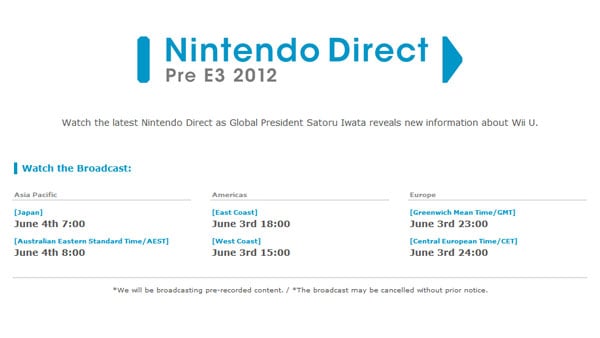
Nintendo have a lot to prove this year as they build up to the release of their next generation console the Nintendo Wii U which is set to hit retail in the 2012 Holiday period. Nintendo appear to have a plethora of information and announcements for this years E3 as they have ran a Pre E3 direct presentation to reveal new information about some of the Wii U's new hardware and software features.

 Hardware:

Wii U Tablet Controller: 

Wii U Tablet Controller named Wii U Gamepad
Wii U Gamepad changed slightly from prototype seen in E3 2011
 - Slider pads changed to Analogue Sticks 
 - NFC Chip on bottom left corner of Gamepad
 - Start & Select Buttons Moved to below the face buttons on right hand side
 - Gamepad longer and more comfortable to hold

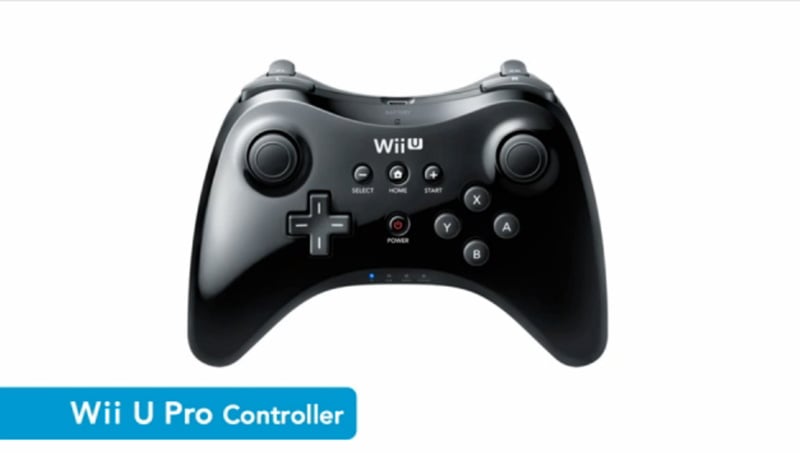
Wii U Pro Controller announced:


This new, yet incredibly familiar looking controller, aimed at the 'hardcore' audience is intended for longer play sessions than using the Wii U's Game pad. Despite looking an awful lot like their rivals current generation controller, it could potentially be one of the best controllers out there featuring what appear to be good analogue triggers and that which the Xbox 360 controller lacked: a decent d-pad.


- Ben Carron


Twitter Delicious Facebook Digg Stumbleupon Favorites More
KingViral
See my work in Kettle Mag