Five Great TV Dramas To Watch This Summer

Here Emma D picks five of her favourite TV Dramas that she recommends you check out

Bittersweet Mondays: Weekly Webcomic

Confab presents the brand new Bittersweet Comics debut with the first of a weekly web-comic series.

Game Review: Serious Sam: The Second Encounter HD

Sam returns in a remake of the 2002 classic sequel, how does it stand up?

The Sexism of Horror Video Games

The history of sexism in video games is almost as old as games themselves, Emma D discusses the underlying sexism of the horror genre

Film Review: The Amazing Spider-Man

Spidey's latest outing hits the cinemas, does this reboot make a name for itself or is it just another cheap Hollywood cash-in?

Volunteer: A Career for the Unemployed

With high rates of unemployment across the globe, Charlotte explains why now is a great time for the jobless to volunteer!

Overrated: The Legend of Zelda Skyward Sword

Claimed by many critics as 'The Best Zelda Ever!'. Long time Zelda fan Emma D argues why it didn't live up to the hype.

Saturday, 30 June 2012

Game Review: Serious Sam HD TFE

Serious Sam HD Review


Developer: Croteam
Publisher: Devolver Digital & CDV Software Entertainment 
Platforms: Steam (reviewed) & Xbox 360
Genre: FPS
Release Date: 24 November 2009
Price: £6.99


In today's market it is fairly unusual to find a first person shooter which doesn't try to overload the player with a "meaningful" story line, a more realistic experience or numerous customization options for practically anything the player can think of. "Serious Sam HD: The First Encounter" is an exception which takes the player back to a time where the rule was "shoot everything you see, no exceptions" and although this doesn't take much thought it provides a fun and oddly refreshing experience. "The First Encounter" is set in Egypt with the plot revolving around collecting elements in order to travel back in time, a truly flawless storyline! Though the game may be lacking in the narrative department it makes up for it with the intense, non-stop gameplay which requires the player to stay focused if they want to stay alive.


Staying alive provides a challenge with the game launching wave after wave of enemy forces at every turn. Enemies consist of horse-like skeleton creatures, soldiers with saw blades for heads, giant walking robotic brains with laser cannons, scorpions with machine guns and headless kamikaze soldiers, who comically scream as they charge towards you, and this is only naming a few.

Sam is however well equipped to take on the variety of ludicrous enemies with an equally varied arsenal including shotguns, machine guns, lasers, canons and rocket launchers. Though there is about sixteen weapons in the game I found myself sticking to about four, with the others becoming more and more redundant as the game progressed. A lack of ammunition wasn't a problem for me however I can see it causing issues on the harder difficulties in the game.

The game, however simple it may be, is most definitely not easy. The continuous bombardment from every direction requires quick reflexes so the player doesn't get overloaded by enemies who can deal fairly large chunks of damage at a time. Trying to deal with enemies as soon as they spawn is the best plan of attack however they spawn so frequently that the player can often be overrun. On a couple of occasions I found myself being literally thrown around by countless charging bull type enemies leading to my inevitable death.


"The First Encounter" seems to have a fairly even difficulty curve by which I mean it starts by sending multiple enemies at you and ends by throwing everything including the kitchen sink. However this onslaught or enemies can be tackles in a group of up to 16 players in co-operative play and although I didn't get to try this feature due to no-one being online, I can imagine it being amazingly good fun.

The game takes most elements back to root level with health and armour packs dotted around each level as opposed to health regeneration found in most fps games today. Level layouts are largely liner with any tasks simply requiring the player to push buttons or find a key in order to progress. The fast paced "shoot on sight" gameplay takes centre stage however it does run the risk or feeling largely repetitive. Impatient gamers shouldn't be put of by this though as the game is one that you can simply dive in and out of at will.

By the midway stage in the game the player will have seen practically ever enemy the game has to offer which does get boring, creating the feeling that you're merely fighting clones. Waves of enemies can become tiring when locked in a room or arena to do battle with the same enemy for minutes on end. However this is a HD remake much can be forgiven.

The visuals in the game are impressive, especially when you look back to the original, which has not aged well, it shows what a good job the developers have done. Everything now looks bright, crisp and colourful which is exactly what you want from a HD remake.

 
Serious Sam The First Encounter (2001)
Serious Sam HD: The First Encounter (2009)

As with the co-operative play, I was unable to play the deathmatch mode due to lack of online users so I can't really comment on it. I imagine it would be very like unreal tournament or quake online and if the opportunity arises I'll definitely give it a go.

As a newcomer to the series I would recommend "Serious Sam HD: The First Encounter". The old-school gameplay provides a solid adrenaline fuelled experience and though it is very simplistic and short in comparison to modern fps games it definitely holds its own. If you are looking for relentless action or simply just want to shoot things until they explode "Serious Sam" will deliver.


- Tom Seed

Friday, 29 June 2012

Game Feature: Automatic or Cinematic?

Now showing on a games console near you:

As the technology behind games grows increasingly more powerful, developers have been able to produce increasingly more complex game features. They have been able to reach goals that were unimaginable fifteen, ten and even five years ago. Better technology and sky-rocketing budgets have allowed developers to strive to blur the line between films and games, to create a more cinematic experience for the player. Games like Bethesda’s Skyrim, which allows Dragons to appear in random encounters for the player to fight, CD Projekt RED’s The Witcher 2, which contains a multi-layered, mature story with deep political and racial themes, and Naughty Dog’s Uncharted series, which features set pieces worthy of a summer blockbuster, have all effectively transcended “games”. They have become experiences that would not feel out of place in your local cinema. But, as successful as these games are in what they aimed to achieve, other developers have taken different routes.

Now this, is cinematic!

    The difference between games and films is clear and well-defined. In a film, you are merely the observer to the story being told on screen. You have no say in what happens, no chance to defend the life of a damsel in distress, and no method of failure. In games, you are a participant. You control the protagonist and, although most games do not feature a branching narrative, you feel like your involvement has an effect on the progression of the story. In essence, the fact that you have control is one of the purest definitions of what is a “game”. But in an effort to become more cinematic, the player’s control is being increasingly removed.

    A perfect example of this would be the single player campaign of DICE’s Battlefield 3. It is a corridor shooter in the truest sense of the term. Players are funnelled down tight paths eliminating targets as they progress to the next quick time event. There is very little control here. The player’s path is surrounded by kill zones, areas where the screen is filled with static and orders to return to the mission are barked through your speakers. You are given ten seconds to return to your pre-determined path, or you face a game over screen. These paths are sometimes so small that even venturing down a small alleyway in search of a collectible is met with your squad threatening to “stick a boot up your ass”. Any meaningful action that happens in the game, happens via a cutscene or a quick time event where the player has no control over their actions. Even more absurdly, destruction is limited to a point where the only real destruction happens in a scripted event. In an engine like Frostbite 2, this is silly. With this engine, we can create our own cinematic moments, we shouldn’t be limited to one specific building that DICE has decided must come down. Some of the funnest moments in the Battlefield series is using the environment’s destructibility to your advantage, and Battlefield 3 limits this almost entirely. I apologise if this has come across as rather ranty, but I found these to be glaring problems with the campaign.

Beautiful? Yes. Are you in control? No.

Developers have to realise that games are not movies. Limiting our control of a situation, taking away that vital connection to what we are playing is not going to make games more enjoyable. We don’t want to watch the action, we want to be in it. Give us back control.


- Paul Brown

Thursday, 28 June 2012

Game News: GametoAid Raise Money for Charity By Playing Games


A group of students in Adelaide, Australia will host and stream a live Zelda video-game marathon raising money for Child’s Play charity. Hosted on their site, GametoAid, the stream will feature two teams playing through six titles from Nintendo's The Legend of Zelda series, to raise money for Childs Play
"Child's Play seeks to improve the lives of children in hospitals around the world through the kindness and generosity of the video game industry and the power of play. It's an honour to be supporting such a great gaming-related cause, and I hope that together with your help we can make a difference to a bunch of childrens' lives."
The marathon is scheduled to start on Thursday the 28th of June at these following times:

Time Zone - Marathon Start
BST- 09:30AM
PST- 04:30AM
EST-01:30AM 
A-EST-18:30PM


"The Zelda Timeline Marathon will be broadcast live online, where thousands of viewers will tune in to watch and donate. Over a duration of over 72 hours, several players will take shifts to complete a selection of Zelda games ranging from Ocarina of Time to Skyward Sword. The team will interact with viewers of the marathon through a chat box, and hope to leverage social media services such as Twitter and Facebook to spread the word about the charity drive." 


Unlike some other marathons GameToAid aim to have as much interaction and communication with their audience as possible. One of the group aims to always on available to chat in order to take requests for challenges, hand out prizes, run multiple contests and looking at any submitted fan art.

The Zelda titles they will be playing through are as follows:

Skyward Sword
Ocarina of Time 
A Link to the Past 
Majora's Mask 
Link's Awakening 
The Wind Waker

GameToAid have been fundraising since December 2010, which is when they had their first ever marathon (Game Over School). Since then they have been playing through some great games and some not-so-great games.


"The student-run group GameToAid has raised over $26,000 for various charities in the past 18 months, and have had a total of 4.3 million viewers. “Itʼs a great way to bring gamers together to give back to the community," said Toby Zerner, event coordinator, 'and to use video games for a good cause.'"


So why not take a look at the stream and perhaps donate anything you can?
Also feel free to comment below as to which is your favourite Zelda game!


GameToAid Links
- Michael Johnson (Slurmnator)
Author's note: 'I'll be on chat moderating as always so feel free to come say hello.'

Wednesday, 27 June 2012

Tech News: Google announces Nexus 7 Tablet

Google's new Nexus 7 Tablet 


Earlier today, Google revealed their first official 7" tablet, the Nexus 7, at their Google I/O conference.


The tablet, made by Asus, will be the first device to debut with the upcoming Android 4.1 release 'Jellybean'. Google will be launching two very affordable models come Mid-July.


Model - UK/US Price
8GB £159  $199
16GB £199 $249


Google's speedy tablet is set to run on a powerful 1.3Ghz Tegra 3 Quadcore processor, 1GB of RAM, a crisp 7" 1280x800 HD resolution screen (216 PPI) and will come in 8GB and 16GB storage models. Unfortunately for high capacity enthusiasts, there will be no physical expandable memory slots.


The full list of specs can be found: Here


As well as fighting for a share of Apple's current share in the tablet market, this new powerful yet affordable tablet is set to challenge Amazon's Kindle Fire which is currently the best selling Android Tablet in the US. Amazon has yet to release their 7" Kindle Fire tablet outside of North America which means Google could be the first to tap into the 'affordable premium tablets' market in the UK.


- Ben Carron

Monday, 25 June 2012

News: Facebook adds 'Local Friend Finder' service.

Facebook Local Friend Finder 

Social network giant, Facebook, have quietly introduced a new friend finding service for Facebook mobile. 


Simply dubbed 'Friendshake' the new service allows Facebook users to 'find friends nearby' using their smartphone's internet and GPS connections. 


(image from TCtechcrunch.com)

With this new service making it easier than ever before to find new acquaintances at festivals, concerts and other public events, now is the perfect time for facebook users to check over their accounts privacy settings.

- Ben Carron

Saturday, 23 June 2012

Game News: Nintendo eShop Anniversary Sale

Nintendo celebrates eShop's first birthday with discounted titles
Nintendo announced during the recent Nintendo Direct that a special anniversary/summer sale taking effect over the next fortnight in Europe and Japan to celebrate the Nintendo eShop's first anniversary.

For North American 3DS owners, the downloadable Gameboy classic, Super Mario Land will be on sale for the discounted price of $2.99 from June 6th-24th 


Between June 22nd and June 28th the following titles will be reduced by 20%:

Pullblox - £4.30 

Zen Pinball 3D - £3.60 

Let's Golf 3D - £4.30 

Super Mario Land - £2.90 

The Legend of Zelda: Link's Awakening DX - £4.30 

In the week that follows, June 28th to July 5th, these games will be discounted:

Dillon's Rolling Western 
Freakyforms 
Fun! Fun! Minigolf TOUCH! 
Mighty Switch Force! 
Super Mario Land 2


- Vernon Schieck


Get a free giffgaff Sim

Game News: Nintendo 3DS XL Announced

Nintendo announces new jumbo 3DS revision


Nintendo has announced a new 3DS hardware revision at its latest Nintendo Direct broadcast.
Simply named the Nintendo 3DS XL (or Nintendo 3DS LL in Japan), the system revision shares similarities to the Nintendo DSi XL/LL that was released in 2010.


The Nintendo 3DS XL comes in three colours. In Europe it will be Blue, Red and Silver while Japanese gamers can get White, Red and Black and Silver and Black. It features an increase in screen size to 90% larger than the original Nintendo 3DS' screen and features a longer battery life. Ranging from 3.5 to 6.5 hours for Nintendo 3DS software and 6 to 10 hours for Nintendo DS software, depending on the brightness of the system, 3D usage and other features.

The pixel density of the 3DS XL works out to be less of a significant decrease in ppi than the DSiXL was due to the 3DS' higher resolution screen meaning 3DS titles shouldn't suffer too much graphically from the jump in size.


Original 3DS: 132.15ppi
3DS XL: 95.59ppi
----------
Original DS: 106.67ppi
DS Lite: 102.56ppi
DSi: 98: 46ppi
DSi XL: 76.19ppi

Source: [en.wikipedia.org] & [pixeldensitycalculator.com]

The Nintendo 3DS XL will release simultaneously in Europe, for around £179.99, and in Japan on July 28th, and finally in North America on August 19th for $199.99


- Vernon Schieck

Monday, 4 June 2012

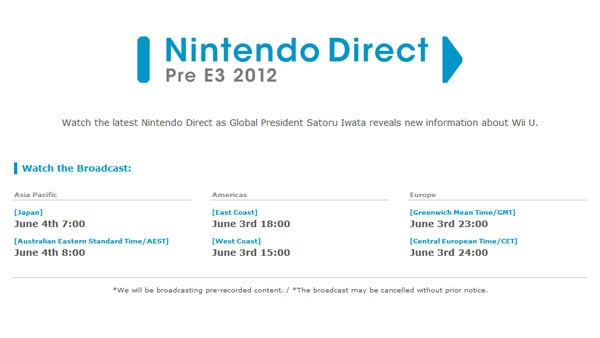
Nintendo Direct Pre E3 2012 Hardware Round Up


Once again gamers are calling in sick days, stocking up on snacks as they prepare for the years biggest gaming expo, where Microsoft, Sony and Nintendo hold conferences which are set to run over the next couple of days, as well as conferences being held by three of the largest publishers: Ubisoft, Konami and EA. 

Nintendo have a lot to prove this year as they build up to the release of their next generation console the Nintendo Wii U which is set to hit retail in the 2012 Holiday period. Nintendo appear to have a plethora of information and announcements for this years E3 as they have ran a Pre E3 direct presentation to reveal new information about some of the Wii U's new hardware and software features.

 Hardware:

Wii U Tablet Controller: 

Wii U Tablet Controller named Wii U Gamepad
Wii U Gamepad changed slightly from prototype seen in E3 2011
 - Slider pads changed to Analogue Sticks 
 - NFC Chip on bottom left corner of Gamepad
 - Start & Select Buttons Moved to below the face buttons on right hand side
 - Gamepad longer and more comfortable to hold

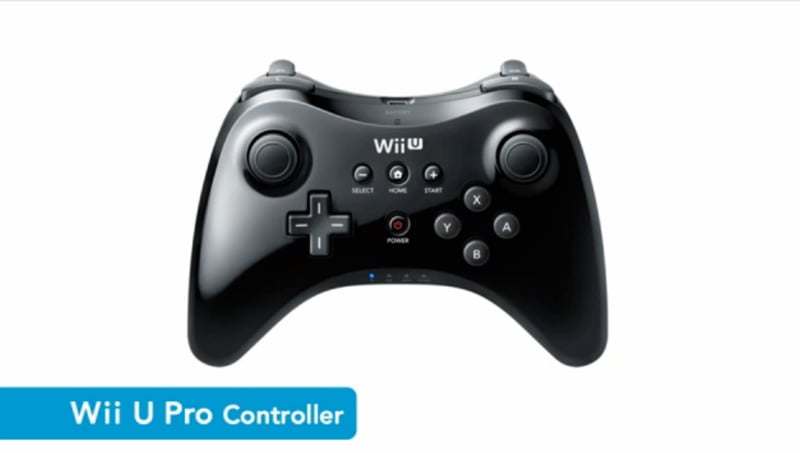
Wii U Pro Controller announced:


This new, yet incredibly familiar looking controller, aimed at the 'hardcore' audience is intended for longer play sessions than using the Wii U's Game pad. Despite looking an awful lot like their rivals current generation controller, it could potentially be one of the best controllers out there featuring what appear to be good analogue triggers and that which the Xbox 360 controller lacked: a decent d-pad.


- Ben Carron


Sunday, 3 June 2012

Tech Review: iPad - One of the finest Tablets that nobody needs


Another year, another iThingy by Apple. Not a laptop, not a phone, but instead a new, ever-so-slightly-modified version of the iPad 2. A beautifully crafted 7-10” slab of technology with a touchscreen for primary input and wireless technologies for communication and data transfer. Sure they look pretty neat and certainly feel cool and intuitive to use but do we really need them?


Tablets are not as functional as laptops and as yet  are not small or portable enough as your smartphone, so where exactly is the market for them? Yes, you can word process on them, but the whole experience feels clumsy and troublesome compared to the ease of typing on a laptop or desktop computer. Society seems to have reached a point where we’re making sleek gadgets that we just do not need. Yes you can draw sketches or read books on the high resolution touch-screen, but there are dedicated drawing tablets for that and e-readers with e-ink screens which do not strain your eyes after a few chapters. Hell, what’s wrong with just drawing on paper and reading a book? The niche that the iPad manages to fill is that of convenience for cool people who must have the new... everything. Smartphones offer the same convenience but wait - the iPad has a bigger screen and more power under the bonnet. Laptops are portable too but require a time consuming boot-up and a protective bag. The iPad will fit in most bags, satchels and rucksacks, and battery life lasts anywhere from six to ten hours, compared to a laptop’s paltry two to four hours. The iPad cannot replace a laptop for work-heavy users and in no way can it replace a mobile phone, it would look implausibly idiotic pulling an iPad out of your bag to take a call.
iPad & iPhoneMany tablet owners are doing just what smartphone owners do but with a few more inches of playspace. The new iPad’s major new feature is the amazingly high resolution screen (2048x1536 pixels) which is actually crisper and more detailed than any HDTV on the market. The 9.7” screen works wonders for drawing detailed sketches, reading larger volumes of text, and editing photos etc. If you have ever played Draw Something, the hugely popular pictionary-like game, you’ll know how tricky it is drawing on a smartphone’s tiny screen. Much like the iPhone 4’s retina screen, the iPad’s retina screen makes high resolution images and videos look more beautiful than ever. The new iPad is indistinguishable from its predecessor by design alone. It comes in at an acceptable weight of 652g (10g more for the 4G version) and at just 0.37 inches wide it fits incredibly well in the hands. Yes, you’ll notice you’re holding a weight, but the device is by no means like a lead brick.


The iPad 3 really comes into its own against other tablets when it comes to apps and software. A choice of over 200,000 dedicated apps and games means there is far more choice for casual users and tech geeks alike, and an abundance of higher quality apps than are available on competing tablets.


Gamers interested in picking up a tablet should note that In the last couple of years the gaming library on iPad has exploded with high quality releases, with graphics rivalling output on even the Xbox and Playstation 3. The iPad 3 is the definitive tablet to own if gaming is a big factor in helping you decide which tablet to purchase.


So the new iPad is an impressive piece of kit, but aside from 4G mobile internet technology, which isn’t even available in the UK until the end of 2012 or mid 2013, it doesn’t really do anything new that the iPad 2 can’t; it just does everything with a prettier screen and more processing power.


The extra £100 cost over the iPad 2’s price nets you a higher resolution screen, a better rear facing camera and a more powerful processor. It’s a worthy investment if you’re spending a few hundred quid on a device anyway and keeps you future proof. If you really like the extra detail that HDTV brought into our living rooms the new screen will not disappoint.


Should you buy it?

iPad 2 owners may want to give upgrading a miss as it’s not a huge jump in features or specifications, but if you’re in the market for a new (and unnecessary) tablet, have a few hundred quid to burn and don’t already own one, then the iPad 3 is an easy recommendation. Just don’t expect it to replace your laptop or compete with your phone for portability.


  • Manufacturer: Apple

  • Price: £429-£659
  • Released: 09/03/2012
  • Battery life: 8-10 Hours
  • Colours: Black/White
Pros:
  • Lightweight

  • Stunningly high resolution screen
  • 
Extensive battery life
  • 
Vast catalogue Software and Games
Cons:

  • Expensive
  • No groundbreaking new features over last model

  • Still can’t fully replace your laptop
  • 
Doesn’t play nicely with Android Phones
  • 
Poor quality front facing Camera
- Ben Carron

Thursday, 26 April 2012

Game Review: Pushmo


  • Publisher: Nintendo
  • Developer: Intelligent Systems
  • Platform: Nintendo 3DS (download)
  • Genre: Puzzle
  • Release Date: 8th December 2011
  • Price: £5.40/$6.99
Pushmo (known as Pullblox in Europe) is Intelligent Systems first entry on the Nintendo eShop for the Nintendo 3DS system. The company is well known for making the Advance Wars, Fire Emblem, Paper Mario and WarioWare franchises. Intelligent Systems has a great tracking record behind the other franchises they contributed as well, so you can be assured that this one will be great too! Believe me, you will not be disappointed when you purchase this download title!
Finally, I've saved you!

The game is set in Pushmo Park, which contains special puzzles called Pushmo. Each puzzle is stacked of colourful blocks and are designed to slide forwards and backwards to three rows. Players control Mallo, a round and happy human-like character. He is instructed by Papa Blox to rescue the children trapped in the puzzles. The objective of the game is to create an appropriate path that you can rescue the child trapped in the puzzle and/or locate the goal flag. On the way there, Mallo must go through certain obstacles, such as manholes, ladders and triggering switches that only certain blocks full forward. The puzzle's difficulty is set upon the number of stars showing on that level. The higher the stars, the harder its going to be. In the beginning levels, the game teaches you the basics of how to move these blocks, so you can access the goal area. Further on when you progressed through a certain number of puzzles, you'll go into the advanced lessons learning about the more difficult objects, like the switches mentioned above and going through manholes that are only the same colour. Once that has been done you'll be able to go through puzzles that have this technique. The great part of this is you may even come across some Nintendo inspired levels as well, which is full of nostalgia!

Pushmo takes great advantage of the steostopic 3D feature, which is pretty amazing! At the beginning of every level the blocks are all flattened at the back, making them invisible until you pull them forward. When you start to pull them a bit, the 3D effect starts to come towards you a bit as well. The game's art is incredible, especially in 3D. The bright vibrant colours from the blocks are coming through very nicely. In terms of the sound, it flows very well with the gameplay. The 8-bit and modern beats blend nicely together.

Experience how the game plays visually by watching this trailer.

Pushmo Studio is the place to create custom puzzles to play yourself or a friend. You can also put the puzzle data on a QR code to share to others in popular places such as the Internet.

Conclusion

Pushmo is by far one of the best games available on the Nintendo eShop for the Nintendo 3DS system. With charming and addicting gameplay at a value price. It's a bit disappointing that there is no StreetPass or SpotPass features involved in this game; but the inclusion of the QR code feature kind of makes up for it. Nonetheless, I highly recommend everyone that has a Nintendo 3DS system to make a purchase and download the game right now and experience this gem!

-Vernon Schieck

Friday, 13 April 2012

Game Review: The Pinball Arcade - As Good as it Gets


  • Publisher: FarSight Studios
  • Developer: Crave Entertainment
  • Platforms: Xbox 360 (XBLA, Reviewed), Playstation 3 (PSN), iOS, Android, Macintosh. Windows PC and Nintendo 3DS announced
  • Genres: Simulation
  • Players: 1-4
  • Release Date: April 4, 2012 (PSN/XBLA)
  • Price:  $10/800 MSP (PSN/XBLA)

By now, it’s probably safe to say that a good majority of the gaming population has never experienced the joys of a real arcade. Pinball tables have become scarce which is a particular shame since, even more so than most arcade cabinets, there’s really no way to truly recreate the physicality and connectedness of real pinball in a virtual environment. The Pinball Arcade from FarSight Studios comes damn close, reproducing in painstaking detail every nuance and quirk that exists on their real-life counterparts.

PS3 and 360 owners who are familiar with any of the four tables initially available with the game (selections from Bally, Williams, Stern and Gottlieb – Theatre of Magic, Tales of the Arabian Nights, Ripley’s Believe it or Not! and Black Hole, respectively) will immediately feel right at home, and should find that for the most part, the action and ball physics feel just about right. Everything from the table art and playfields to the sounds, soundtracks and the dot matrix displays are meticulously recreated and a blast to play. But I want to make this clear right away: The Pinball Arcade is as much for people who have never been lucky enough to experience a real table as it is for nostalgia seekers and enthusiasts.

Black Hole, with its reversed lower playfield
Video pinball isn’t anything new, of course. Notably Zen Studios have emerged as champions of the genre, with Zen Pinball and its upcoming sequel (PSN), and Pinball FX & FX2 (XBLA), touting realistic physics and ball control. Now, I’m lucky and I have access to a wealth of great tables locally – including one found in this collection, and I can say without hesitation that The Pinball Arcade plays more like the real thing than any other pinball simulation I’ve played to date. Whether I can say that someone will prefer it over Zen’s offerings isn’t for me to say and frankly, would be splitting hairs anyway; the real draw of the game is quite simply the allure of getting to play these masterpieces of pinball design, recreated here with impeccable accuracy. FarSight’s attention to detail and fine tuned game play is astonishing.

It’s not all perfect, mind you. The overall presentation of the game leaves a lot to be desired in its current state. Control options are limited, there is no support for multiple controllers and with the PS3 in particular there is no Sixaxis support for nudges, which feels like a major missed opportunity. Gameplay settings aren’t saved between sessions, a minor if perplexing omission. Getting a good view of the action is fairly good, with three angle settings, switchable between fixed- and follow-camera options, though more angles wouldn’t hurt. The view at the plunger in particular is far from ideal and cannot be changed, though FarSight have confirmed directly that this will be improved upon in the future. 

Ripley's Believe it or Not! Hands down the most complicated of the group
Also gone is the kitschy virtual arcade used for table selection last seen in FarSight’s previous effort, Pinball Hall of Fame: The Williams Collection but instead of a simple list format, tables are selected through a clumsy scrolling lineup. While this isn’t much of an issue at the moment, once DLC tables start rolling in (the developer is aiming for an average of one table per month), things are going to get clumsy very quickly. Thankfully, along with frequent content updates, FarSight have been forthcoming and committed to improving the user experience. As it stands, the out-of-game functionality is passable and really doesn’t detract from the excellent game play found within. 

Thankfully, the game does go to great lengths to ensure one can make sense of what's expected of a player, with each table including comprehensive rule sets, broken down into short, individual pages that point toward the goals as they’re explained. This helps a great deal where some of the more cryptic (or just plain expansive – the Ripley’s tutorial sports nearly 400 pages!) table goals are concerned, and will help you immensely if you plan to rack up the best scores and see how you fare on the leaderboards. They’ve even included short write-ups on the history of the tables, right down to scans of the promotional fliers that were sent to arcade owners back in the day.

At 800 points/$10 for the initial release and an expected 400 points/$5 for DLC (it’s expected that tables will be released as two-packs for consoles; other platforms have different pricing and availability), The Pinball Arcade is priced right in line with its direct competitor, somewhat impressive considering the licensing hell FarSight is likely to be faced with in securing the rights to the properties. It will be interesting to see whether they will be successful where other licenses are concerned; legendary tables like Addams Family, Twilight Zone and Indiana Jones, just to name a few, aren’t likely going to be easy to obtain. While I won’t hold my breath, the fact that Ripley’s Believe it or Not! is already present here is a very good sign (and having the rights to Stern Pinball is promising, being a company famous for their movie- and TV-themed tables). 

Even without any household names, pinball has a long and varied catalogue full of bizarre and memorable themes, easily standing on their own merits. Williams’ [Ye Olde] Medieval Madness (a personal and fan favourite) and The Machine: Bride of Pinbot, have already been announced as the first DLC tables for PSN and XBLA, with several titles named for future updates, including massive hits like Cirqus Voltaire, Funhouse, Attack from Mars and Creature from the Black Lagoon.

Welcome to the Theatre!
FarSight has gone out of its way to ensure as many people can play their game as possible, too. iPhone and iPad players have been enjoying the iOS version  since late 2011, Mac, Android, PSN and XBLA versions all released recently, and Windows and Nintendo 3DS versions are expected as well. Of particular note to PS3 and Vita owners, your $10 gets you BOTH versions of the game, and the Vita offers the ability to play in a vertical orientation for maximum screen real estate. This is a serious perk and should be considered your best option if you are having trouble deciding which platform to get it for. 

If you haven’t gathered already, the folks at FarSight are committed to making this the definitive video pinball experience. They’re working hard to ensure everyone can have a copy of the game, they’ve landed licenses for all four of the big manufacturers (and it has been confirmed that the Stern licence carries rights to tables from SEGA and Data East), have already secured some blockbuster titles and have committed to an aggressive release schedule with a timeline that spans years.  It’s a clear labour of love and we’re reaping the benefits. The downloadable domain is a natural environment for this kind of game and is a natural progression from FarSight's previous disc-based efforts with the Williams/Bally/Gottleib collections. And that’s all just icing on the cake that is the best real pinball simulation available.

Tales of the Arabian Nights - Perhaps the classiest table ever conceived.
If you don’t have access to a real machine... hell, even if you do, The Pinball Arcade is a worthwhile investment for any fan or curious newcomer. It already stands as the next best way to experience some truly classic tables and promises to keep it that way for the foreseeable future. Even if you have no nostalgia for these classics of a bygone era, if you’ve played a pinball video game and enjoyed it, you really can’t do better than The Pinball Arcade. 

It’s man vs. machine at its best, and even though the machine always eventually wins, you never really lose. Get flippin’!


- Ryan McLaren

Tuesday, 10 April 2012

Game Review - Sine Mora: It's About Time (groan)


  • Publisher: Microsoft Studios
  • Developer: Digital Reality/Grasshopper Manufacture
  • Platforms: Xbox 360 (XBLA)
  • Genres: Shooter
  • Players: 1
  • Release Date: March 21, 2012
  • Price:  1200 MSP ($15 USD)


The Shoot-em-up (Shmup) is something of a living relic – a little like pinball, it was king of the arcades until more powerful hardware came around, allowing developers to come up with new and exciting ways play. Despite “bigger and better” experiences becoming commonplace, there are a small group of holdouts that covet these games, much like the fighting game and pinball communities. There is a pureness to these games, one that mercilessly punishes anything but practised and skilled play, and providing little more than bragging rights to a high score. The games are absurdly short, brutally unforgiving and generally underwhelming on a technical level when considering the horsepower available on modern hardware. Over the years, traditional shooting games have become a true niche in gaming; while it never truly died, releases have been slow and sporadic – especially where wholly new IPs are concerned. Sine Mora is both wholly new and rigidly true to its genre roots, but the result is something of a mixed bag.

I’ll get something out of the way immediately: If you’ve read any article on any Shmup released in the last 15 years, you will have inevitably seen something to the effect of “this is not the game to attract newcomers to the genre”.  It has proved challenging for developers to keep their core audience satisfied while drawing in new players. This is perhaps Sine Mora’s one great triumph: This IS the game to attract newcomers to the genre. And while this is something to be lauded, I don’t see their minds changing, nor do I see them coming back. Frankly, I think a lot of this has to do with the priorities of the average gamer and conventions in the industry, but this is a Sine Mora review, not an editorial piece, so we’ll stick to the good, the bad and the very, very ugly.

Sine Mora was co-developed by European studio Digital Reality and Japanese outfit Grasshopper Manufacture. While the Japanese have a long and storied pedigree in the genre, European developers haven’t fared so well (as a quick bit of trivia, “Euroshmup” is arguably a sub-genre in and of itself, and not one that carries much favour among shooting game stalwarts). With Grasshopper handling the art direction and sound design, Digital Reality took care of the rest. Yes, that makes Sine Mora a Euroshmup, but a reasonably well-executed Euroshmup and certainly one that manages to be the exception, not the rule. Sine Mora has tight controls, well-paced game play, solid shooting mechanics and some fun game play gimmicks.

One classy gunbird


It’s also a stunner. Grasshopper has outdone itself here, with a fun (if overused) Steampunk aesthetic and consistent art direction that elevates the experience and enhances the remarkable-for-the-genre storytelling (more on that in a bit). This game is flat-out gorgeous, with highly dynamic landscapes, interesting enemy and boss designs and fantastic animations, all running at a perfectly consistent 60FPS.

It sounds great, too. Yes, the gunfire and effects all have the impact one would expect, but the soundtrack (composed by Akira Yamaoka of Silent Hill fame) – like the graphical presentation, lends so much to the game’s atmosphere and dark subject matter that it frankly sets a new standard for immersion in an otherwise flat (pun intended) genre. There is a tragic fragility in the game’s score that mirrors the unfolding tale and provides a stark counterpoint to the mania unfolding on screen.

The audio and visual designs come together brilliantly to underscore the real draw for those unfamiliar with the genre, something that is sure to surprise shooting game veterans: Sine Mora has a remarkable story and universe. Without spoiling anything, Sine Mora spins a yarn of revenge, sacrifice and moral ambiguity. At its heart, it is a tale of revenge, of a father hell bent on avenging his son’s death no matter the cost. Language is heady, a melancholy prose from multiple viewpoints that serves to add method to the onscreen madness. Told in postmodern fashion, the game’s story mode is presented in disparate chunks, fleshing out each pilot’s plight in chronologically shuffled sequences that only start to homogenise as you near the game’s final showdown.

Voiced entirely in Digital Realms’ native Hungarian (another design choice that further immerses you in Sine Mora’s universe), each stage opens with a block of text, translating the passionately acted monologues of our pilot “heroes”. Opting to rest on the strength of the world they created, Sine Mora’s story is never explicitly divulged, opting instead for snippets of personal motivation and hints at the way-of-the-world, as they know it. This lends an air of mystery to the goings on and, while it can admittedly come off as confusing or cryptic, there is a surprising amount of depth presented here, providing just enough information and intricacy to allow our imaginations to fill the gaps. It’s the kind of minimalist writing that fosters debate among fans and, ultimately, the kind that makes you seethe for a sequel. Upon completion of the main campaign, you are treated to extras that help flesh out the canon, including alternative story paths and even a second “true” ending. There is an impressive maturity in the game’s storytelling, sparse though it may be, and is a remarkable achievement for (or in spite of) the genre.

So for newcomers to the genre, in short, this is a game you must try. Unlike most shmups, this is a game you will be able to see to the end without too much trial-and-error. And between the game’s spectacular visual appeal, compelling story and highly polished game play, this should be considered a top class XBLA release alongside platform sweethearts like Shadow Complex, Braid and Super Meat Boy.

One of many boss encounters. The stage bosses are a real highlight.


For shooter veterans, however, the recommendation changes somewhat. Is Sine Mora still worth an investment? Absolutely, yes. But there’s a caveat, and not a small one. For those of us who pride themselves on one-credit master runs, the game disappoints. Upon completion of the game’s story, arcade mode becomes available (and with it, an impressive array of ships, pilots and payloads). While this is a great (if expected) addition to the package, the game falters here due to the steep increase in difficulty. The game level in arcade mode is hard or harder, which is sure to scare off rookies (why normal or easy aren’t available here seems like a complete misstep), and the game’s core gimmick, time, falls victim to another game play mechanic that wasn’t an issue in the campaign: Random powerups.
See, Sine Mora uses a timer – ever counting down to zero (and your death) – in place of extra lives or a health bar. So long as you have time, you can’t be destroyed. Killing enemies and parts of bosses grants you additional time, while taking damage strips you of huge chunks of the game’s precious commodity. In theory, it’s an excellent system with a classic risk vs. reward dynamic. In reality, it’s woefully unbalanced. In Sine Mora’s campaign (incidentally, only playable in easy or normal difficulties), the time mechanic is so lenient, it rarely forces the player to do much more than avoid getting hit too often. In arcade mode however, the timer is significantly reduced, forcing the player to shoot with as much aggression as accuracy and you better hope you don’t take more than a single hit or it’s lights out.

While in theory, this should make for a consistently intense experience – constantly putting yourself in danger to eke out a scant few seconds with every kill sounds like a shooter’s dream, in reality it exposes the game’s powerup system as unbalanced at best, broken at worst. This isn’t generally an issue throughout the stages, as careful shooting and dodging will ensure you make it to the end, but the flaw becomes glaringly apparent the first time you reach a boss. Now, don’t get me wrong: Finding yourself at a boss with under ten seconds to doomsday is clearly a purposeful design choice. All the bosses have several destructible segments (which reward you with time when destroyed), so a lot of the strategy becomes what and when to shoot in order to be successful.

The fault lies in the game’s handling of powerups. While boost items are dropped frequently (every five or so regular enemies killed will drop an item – shields, weapon strength, bombs, slow-mo, etc.), what that item will be is completely random. Your primary weapons fire can be upgraded up to NINE times and there are no guarantees as to where or when you’ll find an upgrade. Now, consider this: You will reach most bosses in arcade mode with about 9-12 seconds left on the counter. At mid-strength and with careful dodging, you’ll be able to deal enough damage in a short enough window to earn extra time and room to breathe. With little to no weapon upgrades, however, you’ll be hard-pressed to take out a part of the boss in time, let alone the whole beast. This wouldn’t be a major issue if getting to the boss underpowered was an infrequent occurrence, but I’ll estimate that around 50% of the time I arrived at a stage boss sufficiently underpowered that the boss fight would be too difficult for my skill level, and about 25% of the time, underpowered enough to make victory impossible. Failing on my own terms is something to expect from the genre; trial and error is a genre staple, after all. But getting to the stage end knowing an attempt is futile is simply bad design.

In the end, it all comes down to value with Sine Mora. On the one hand, the game’s campaign mode is sufficiently compelling to recommend on its own merits. The story and writing are great, the art direction outclasses most AAA retail titles, and the game’s foundation is rock-solid. On the other hand, the game falters in the value department with an arcade mode that will prove far too difficult for most newcomers, and too unbalanced to make repeat practise and mastery a worthwhile endeavour for veterans. Considering a shooter’s main source of longevity comes from high score chasing, it seems tragic that Arcade mode isn’t offered on a lower difficulty, or at least with tweaks to balance out the more stringent time mechanic.

Epileptics beware


At about an hour front-to-back for the campaign, 1200 points will inevitably be too steep a ticket to entry for genre newcomers curious to see what the buzz is about. Conversely, I feel like most shooting veterans (save for the most skilled among us) will lack the patience to invest their time honing skills in the arcade mode – where most of us will spend the bulk of our time - on a mechanic so heavily dependent on luck. It’s a shame, as Sine Mora was a fairly high profile release for a new shooter property, and compelling enough that I think the online leaderboards would have been buzzing for months had there been a little more time spent balancing the powerups and an additional (easier) difficulty mode added for newcomers looking to get a taste of the thrill known as the one-credit-clear.

In the end, Sine Mora should absolutely be commended. It has taken the genre in an exciting new direction for storytelling, sets a high standard with tight controls and game play, impeccable art direction, and provides a wealth of extra modes and ships to toy with when you’re finished the campaign. But while the story mode will entertain newcomers to the genre, the bullish arcade mode will scare them away, and I don’t foresee a lot of shmuppers out there willing to look past the arcade mode’s balance issues to make it worthwhile mastering.

At 1200 points, it’s difficult for me to recommend this game to either camp – the longevity just won’t be there for most of us. If you’re a shooter junkie like me, this was a day-one, sight-unseen no-brainer in any case, but for just about everyone else, wait until it drops to 800 or 600 points and jump on it. It’s a spectacular title to be sure, but flawed enough to make even the most rabid shooter fans balk at the value herein. Sine Mora is a great achievement and should be played, but 800 points seems like the sweet spot for this one.


- Ryan McLaren

Twitter Delicious Facebook Digg Stumbleupon Favorites More
KingViral
See my work in Kettle Mag